
 English

Products
Productos principales:Canal hidroponico NFT/Cubo holandes hidroponico/Canalon de fresa/
Maceta de red de plastico/Medios de cultivo Rockwool
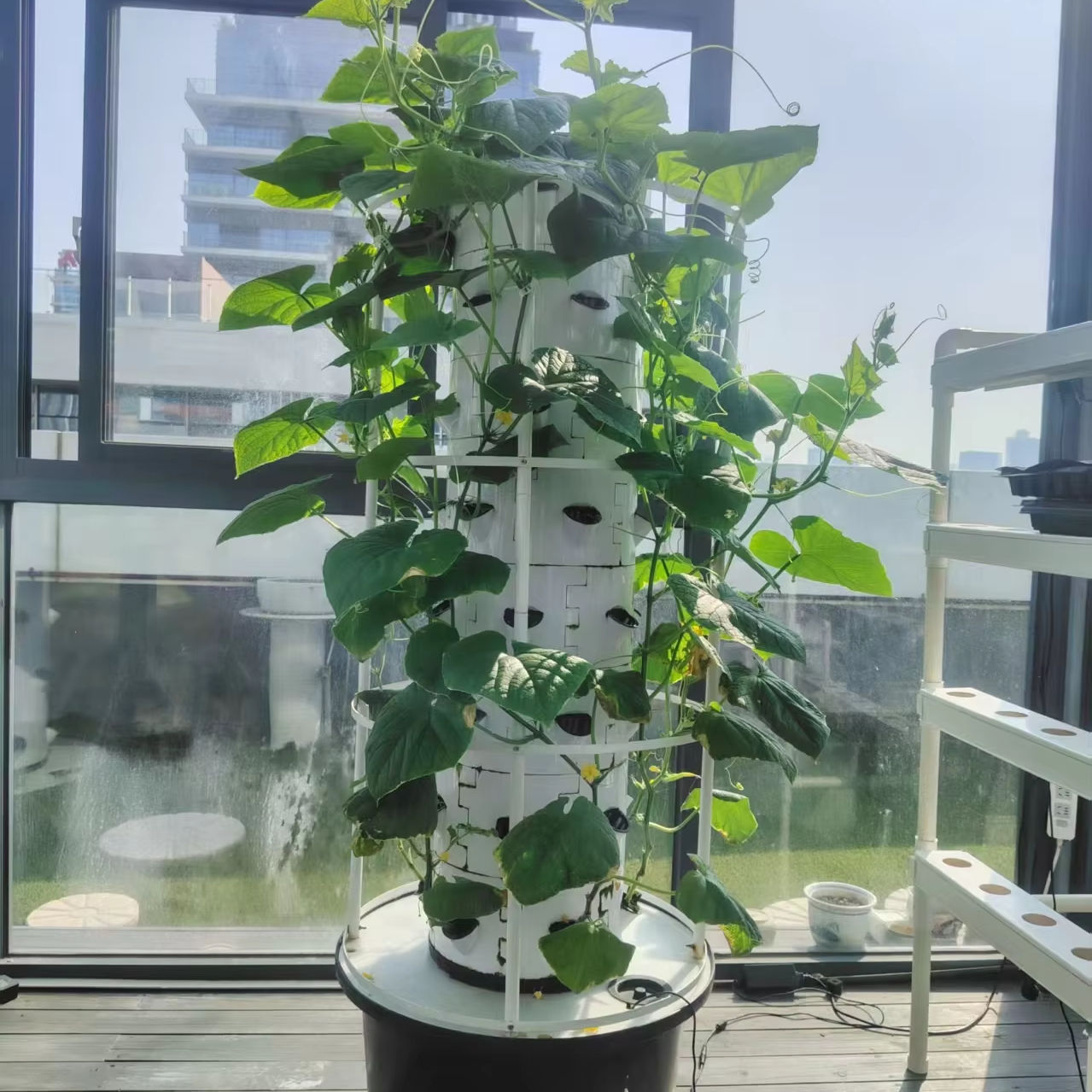


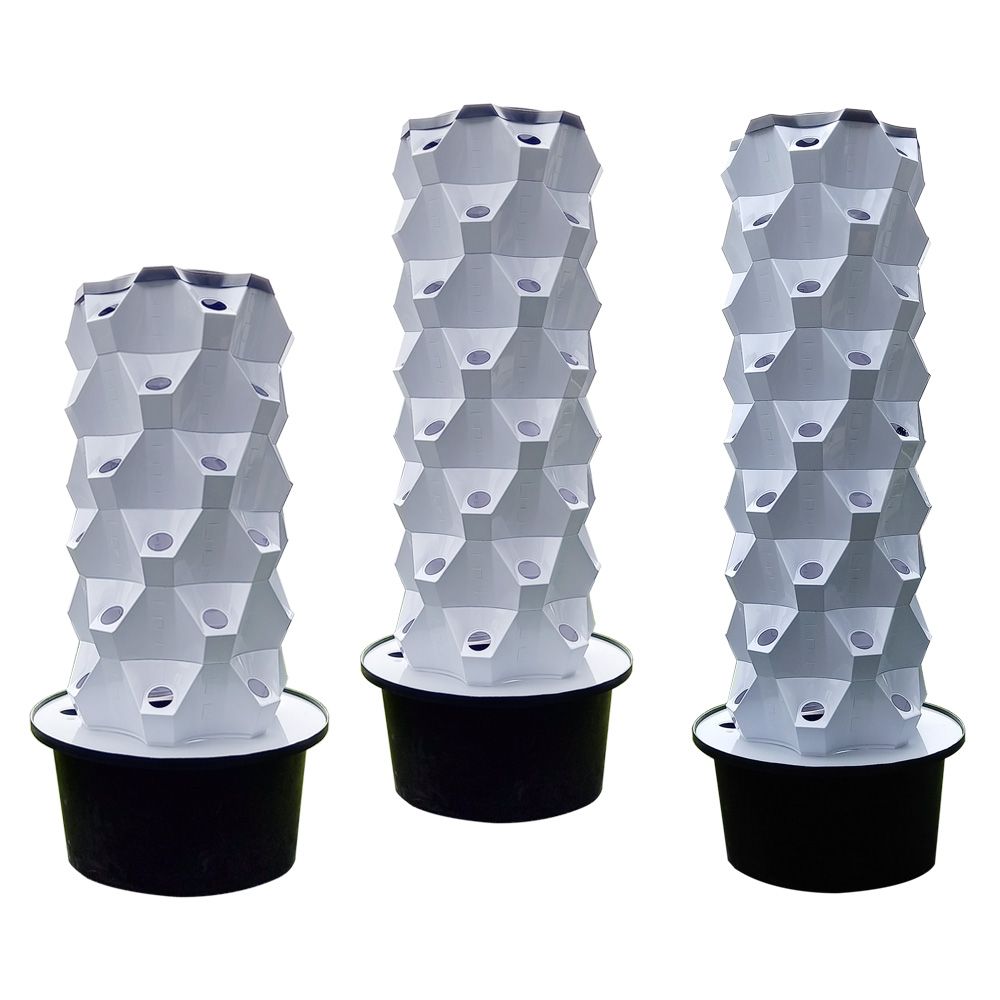
The vertical hydroponic system is a space-saving soilless growing solution designed to grow vegetables, herbs, fruits, and other suitable crops in a vertical arrangement. Instead of using traditional horizontal planting beds, this Vertical hydroponic growing system uses stacked or tower-shaped planting structures to make better use of limited floor space.
With an integrated water tank, water pump, timer, and power adapter, the system provides a convenient way to circulate water and nutrients to plants. Its compact and customizable design makes it suitable for indoor gardening, home cultivation, greenhouses, rooftop farming, and urban agriculture.
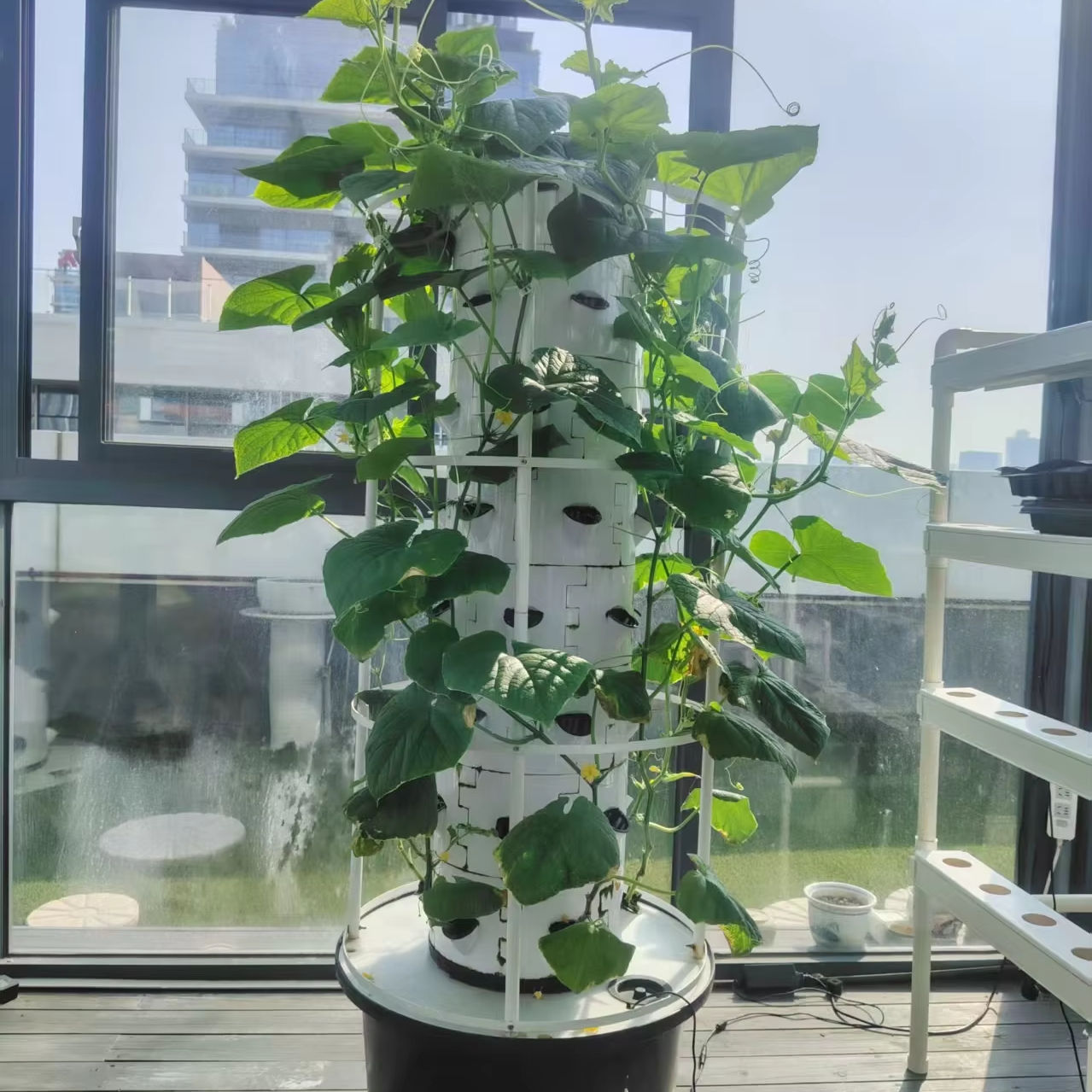
A Vertical Hydroponic System is a hydroponic growing system that arranges plants vertically rather than horizontally.
Plants are positioned in multiple planting openings or levels on a vertical structure. Water and nutrient solution are circulated through the system to provide plants with the water and nutrients they need for growth.
A typical system includes:
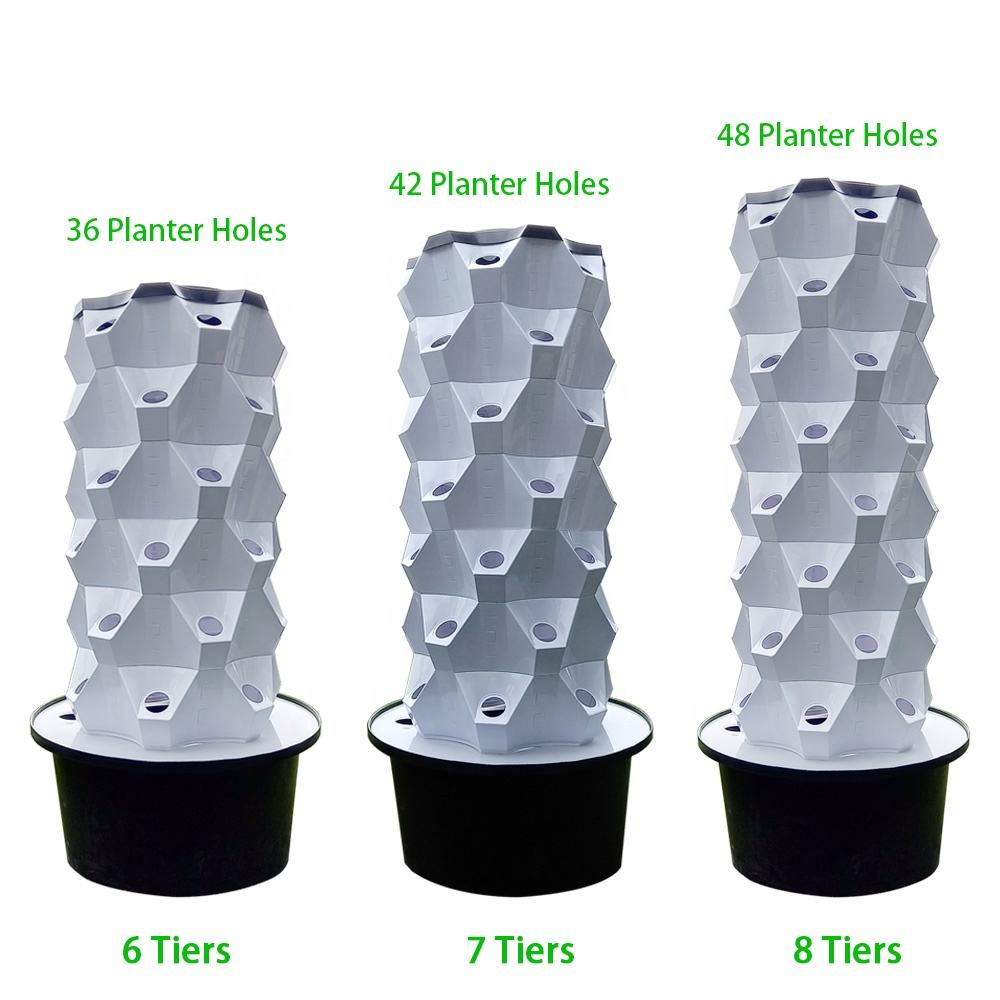
Vertical growing tower
Planting holes or growing modules
Water tank
Water pump
Irrigation components
Timer
Power adapter
Growing accessories
This configuration allows growers to cultivate multiple plants within a relatively small footprint.
One of the main advantages of a Vertical Hydroponic Growing System is efficient use of space.
Traditional growing methods generally require plants to be arranged across a horizontal area. A vertical system instead uses height to increase the number of available planting positions.
This makes a Vertical Hydroponic System particularly suitable for:
Indoor gardens
Balconies
Rooftops
Home gardens
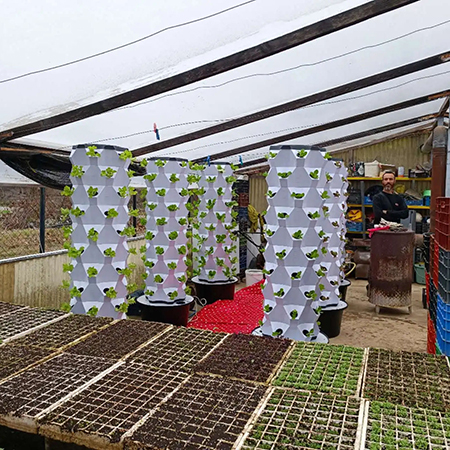
Greenhouses
Urban farms
Restaurants and hotels
Schools and community gardens
For locations where floor space is limited, vertical cultivation can provide more planting capacity without requiring a large horizontal growing area.
The Vertical Hydroponic Tower is the main growing structure of the system.
Depending on the product configuration, the tower can feature multiple planting levels or stackable sections. Plants are placed into dedicated planting openings, while their roots receive water and nutrient solution from the circulation system.
A Stackable Hydroponic Tower can be configured with multiple growing sections to meet different cultivation requirements.
The modular structure can also make transportation, installation, and system expansion more convenient.
A Custom Hydroponic System can be designed according to different project requirements.
Potential customization options include:
Tower dimensions
Number of planting holes
Planting hole size
Number of growing levels
Water tank capacity
Pump configuration
Power supply
System layout
Packaging
This makes the system suitable for OEM and ODM projects as well as different indoor and commercial growing applications.
The integrated water tank and pump form the basic water circulation system.
The water tank stores water or nutrient solution, while the pump transports it through the vertical growing structure.
The basic circulation process can be described as:
Water Tank → Water Pump → Vertical Hydroponic Tower → Plant Roots → Drainage/Return → Water Tank
This circulation helps provide plants with a consistent supply of water and nutrients.
The pump distributes nutrient solution throughout the system, reducing the need to manually water individual plants.
For indoor growers and commercial users, this can make daily irrigation management more convenient.
The built-in timer allows the water pump to operate according to a preset schedule.
Instead of manually turning the pump on and off, users can establish automatic operating intervals based on the requirements of the plants and the system configuration.
Timer-controlled operation can reduce routine manual work and make the Indoor Hydroponic System easier to manage.
It is especially useful for:
Home gardeners
Indoor growers
Office gardens
Greenhouse growers
Urban farming projects
The appropriate pump schedule should be determined according to crop type, environmental conditions, root development, and system design.
The system can be equipped with a movable water tank and portable power adapter, providing greater flexibility during installation and use.
Users can adjust the position of the system according to available space, light conditions, and growing requirements.
This flexibility makes the Vertical Hydroponic System suitable for changing indoor environments, balconies, rooftops, and small growing areas.
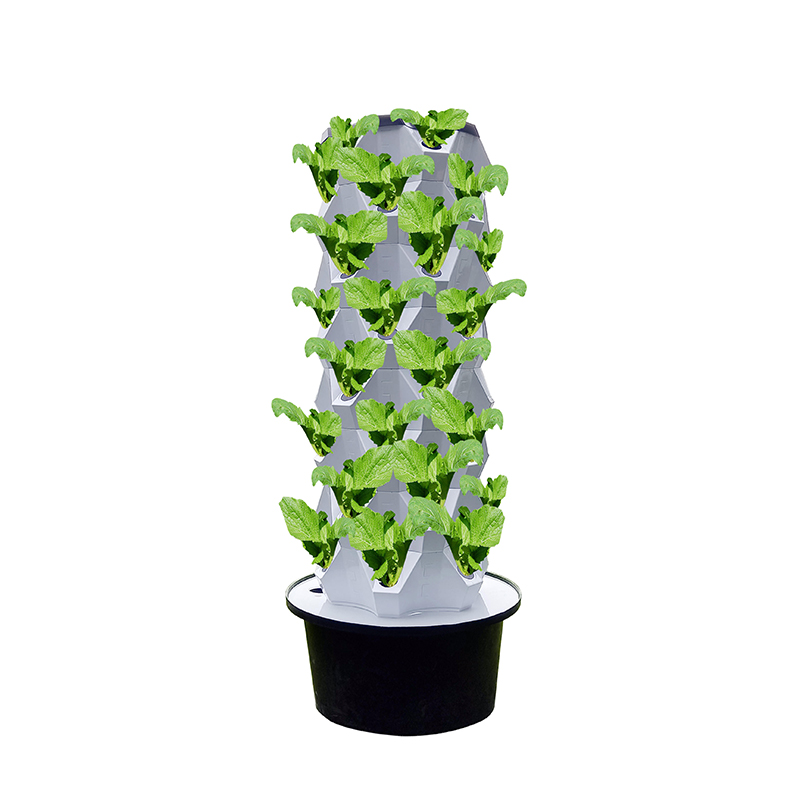
A Hydroponic System for Vegetables can be used to grow many leafy vegetables and compact crops.
Common options include:
Lettuce
Spinach
Kale
Pak choi
Mustard greens
Water spinach
Leafy vegetables are particularly suitable for vertical hydroponic cultivation because many varieties have relatively compact root systems and short growing cycles.
The system can also be used to cultivate herbs such as:
Basil
Mint
Cilantro
Parsley
Chives
Some fruits, especially compact crops such as strawberries, can be grown in a suitable Vertical Hydroponic Growing System.
However, crop suitability depends on the planting space, root requirements, lighting, plant weight, and overall tower structure.
A Vertical Hydroponic System works by delivering water and nutrients to plants through a vertical growing structure without traditional soil.
Fill the water tank with clean water and add suitable hydroponic nutrients according to the crop requirements.
Place seedlings or suitable plants into the planting holes of the Hydroponic Growing Tower.
The water pump moves the nutrient solution from the tank through the growing system.
The circulating solution reaches the root zone and provides the plants with water and dissolved nutrients.
Set the pump operating schedule using the timer according to the growing requirements.
Regularly check the water level, nutrient concentration, plant condition, root development, pump operation, and overall system performance.
The vertical structure allows growers to utilize height instead of relying entirely on horizontal floor space.
The system does not require traditional agricultural soil, making it suitable for indoor and urban growing environments.
The integrated water tank and pump simplify water and nutrient circulation.
The circulating pump and timer can automate much of the routine water delivery process.
The tower can be designed and configured for different growing environments and crop requirements.
The compact design makes the system suitable for locations where traditional agricultural land is limited.
An Indoor Hydroponic System provides a practical option for growing fresh vegetables and herbs in homes, offices, restaurants, and other indoor environments.
Because the plants are arranged vertically, the system can provide multiple growing positions without requiring a large floor area.
When used indoors, growers should provide appropriate lighting, temperature, humidity, air circulation, and nutrient management according to the selected crops.
Where natural sunlight is insufficient, LED grow lights can be used as supplemental lighting.
The Vertical Farming System concept is particularly useful in urban environments where available land is limited.
Multiple Hydroponic Growing Towers can be installed in indoor farms, greenhouses, rooftops, restaurants, or community gardens.
The vertical arrangement can help increase plant density while maintaining a relatively compact footprint.
Potential applications include:
Urban farms
Indoor farms
Rooftop agriculture
Greenhouses
Restaurants
Hotels
Schools
Community gardens
Home gardens
A Vertical Hydroponic System differs from conventional soil-based cultivation in both growing method and space utilization.
| Feature | Vertical Hydroponic System | Traditional Growing |
|---|---|---|
| Growing Method | Soilless | Soil-based |
| Space Arrangement | Vertical | Mainly horizontal |
| Water Delivery | Pump and circulation | Manual or irrigation |
| Growing Medium | Water/nutrient solution | Soil |
| Floor Space | Compact | Generally larger |
| Suitable Locations | Indoor, greenhouse, urban | Outdoor, greenhouse |
| Automation | Timer and pump available | Depends on system |
The vertical hydroponic approach is especially useful when growers want to maximize the number of plants within a limited growing area.
The Hydroponic Tower for Vegetables can be used in both small-scale and larger growing projects.
For home users, a compact tower can provide a convenient way to grow fresh vegetables and herbs.
For commercial growers, multiple towers can be arranged together to create a larger Vertical Hydroponic System.
The appropriate system size depends on:
Available space
Crop selection
Number of plants
Water capacity
Pump capacity
Lighting conditions
Growing environment
The Vertical Hydroponic System combines space-efficient cultivation with a centralized water and nutrient circulation system.
Its key features include:
Vertical space-saving design
Stackable or modular structure
Integrated water tank
Water pump
Timer functionality
Movable water tank
Portable power adapter
Customizable configuration
Suitable for vegetables and herbs
Suitable for selected fruit crops
Indoor and greenhouse applications
Whether used for home gardening, indoor vegetable production, greenhouse cultivation, or urban farming, this Vertical Hydroponic Growing System provides a flexible solution for modern soilless cultivation.
A Vertical Hydroponic System is a soilless growing system that arranges plants vertically in multiple planting positions. Water and nutrients are circulated through the system to support plant growth.
Lettuce, spinach, kale, pak choi, mustard greens, and other compact leafy vegetables are commonly suitable for vertical hydroponic growing.
Yes. Herbs such as basil, mint, cilantro, parsley, and chives can be grown in a suitable Hydroponic Growing Tower.
Yes. Strawberries can be grown in suitable vertical hydroponic systems when sufficient planting space, light, root-zone conditions, and structural support are provided.
A circulating vertical hydroponic system generally uses a water pump to move water and nutrient solution from the tank to the growing tower.
The timer controls the operating schedule of the water pump. It can automate water circulation and reduce the need for manual operation.
Yes. An Indoor Hydroponic System can be used in homes, offices, restaurants, and other indoor environments when suitable lighting, temperature, ventilation, water, and nutrient conditions are provided.
Yes. A Custom Hydroponic System can be configured according to requirements such as tower dimensions, planting hole quantity, water tank capacity, pump configuration, and power supply.

G and N is serving for more than 1,000 customers over 122 countries around the world, offering high-quality products and services to global customers.
Copyright © 2026 G AND N FORTUNE LIMITED All rights reserved.