

 English

News
Focus on G AND N FORTUNE LIMITED - Get to know the new information of the industry quickly!

2026-09-17 09:42:09
Learning how to build a NFT hydroponic system starts with understanding how Nutrient Film Technique works. An NFT hydroponic system uses a shallow, continuously flowing layer of nutrient solution to supply water and nutrients to plant roots. The solution flows through slightly inclined growing channels and returns to a reservoir, creating a recirculating hydroponic growing system.
NFT systems are commonly used for leafy greens and herbs, including lettuce, spinach, kale, basil, mint, and other crops with relatively small root systems. A basic system can be built for home growing, while larger configurations can be developed into commercial or greenhouse NFT hydroponic systems.
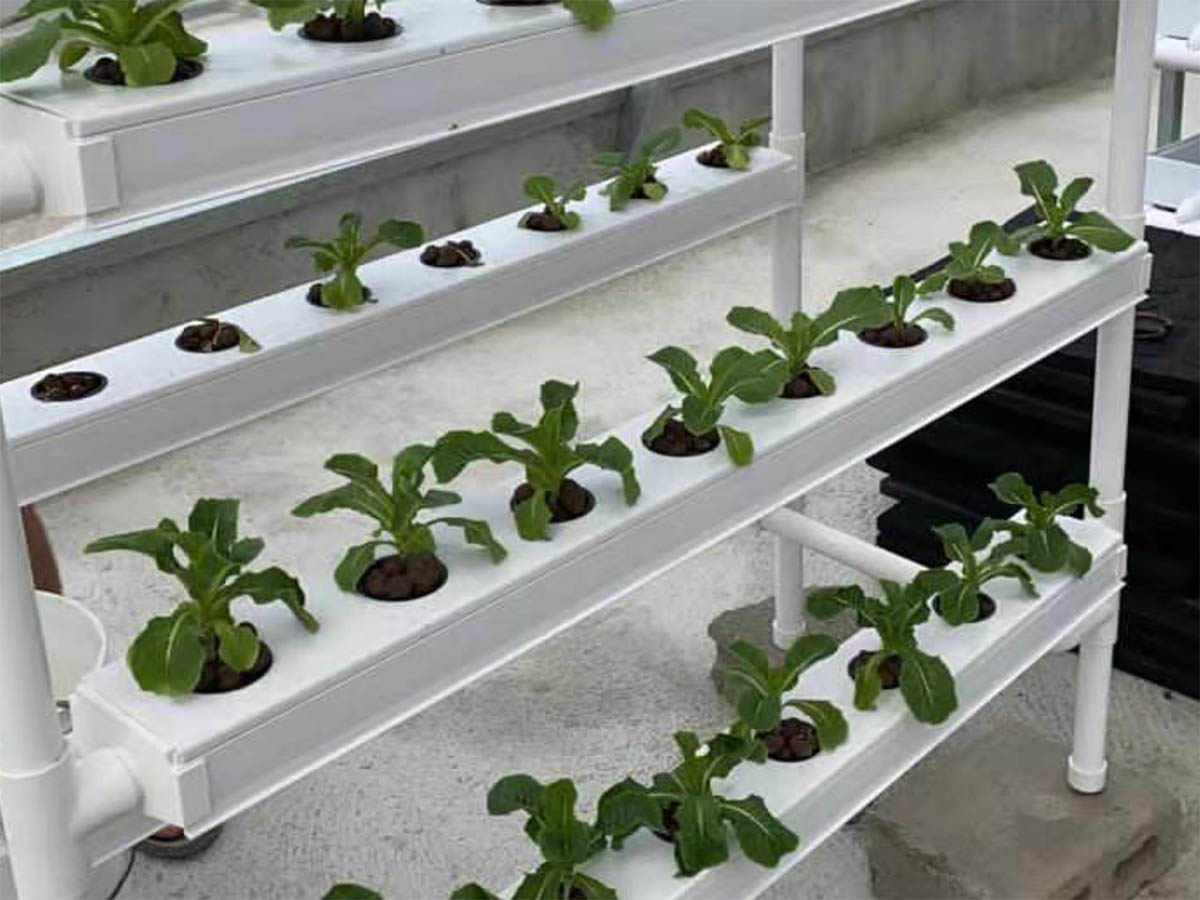
An NFT Hydroponic System is a soilless growing system based on the Nutrient Film Technique. Plants are supported in holes along an NFT Channel, while their roots extend into the channel below.
A pump moves nutrient solution from a water reservoir to the upper end of the growing channel. The solution then flows along the slightly inclined channel before draining back into the reservoir.
The basic circulation is:
Water Reservoir → Pump → NFT Channel → Plant Roots → Drainage → Reservoir
Because the nutrient solution continuously moves through the channel, plant roots can receive both moisture and nutrients while remaining exposed to air.
Before learning how to build an NFT hydroponic system, prepare the main components.
The NFT Hydroponic Channel is the main growing component. It provides space for plants and creates a controlled path for nutrient solution to flow underneath the roots.
For commercial applications, food-grade and UV-resistant materials can be considered according to the installation environment and expected service conditions.
The reservoir stores the nutrient solution. Its capacity should be selected according to the number and length of NFT channels and the overall system design.
A water pump moves the nutrient solution from the reservoir to the growing channels. Pump capacity should be matched to the channel length, number of channels, elevation, and required flow.
Irrigation pipes connect the pump to the NFT channels and distribute nutrient solution to the growing areas.
Drainage pipes return the nutrient solution from the channels to the reservoir. Proper drainage is important for maintaining continuous circulation.
Net pots support the plants while allowing the roots to extend into the NFT channel. The size of the net pot should match the channel openings and selected plants.
Seedlings can be started in suitable growing media before being transferred to the NFT system. Depending on the crop and production method, materials such as seedling Sponges or other hydroponic media may be used.
The following steps provide a basic approach to building an NFT hydroponic system.
Start by determining where the system will be installed and how many plants you want to grow.
Consider:
Available floor space
Number of NFT channels
Channel length
Number of planting holes
Reservoir location
Pump position
Drainage route
Access for planting and harvesting
For a Vertical NFT Hydroponic System, additional consideration should be given to the height and arrangement of each growing level.
A well-planned layout makes irrigation, drainage, cleaning, and harvesting easier.
Place the water reservoir at the lowest practical point of the system. The reservoir should be accessible for checking the nutrient solution, cleaning, and routine maintenance.
The water tank will serve as the starting point and return point of the recirculating system.
Place the water pump inside the reservoir and connect it to the main irrigation pipe.
The pump needs to provide enough flow to deliver nutrient solution to the NFT channels. The required pump capacity depends on the number and dimensions of the channels and the system layout.
Position the NFT Channels on a suitable support structure.
The channels should have a slight slope so that nutrient solution can flow from the inlet end toward the drainage end.
The exact slope depends on the channel design, length, crop, and system configuration. There is no single slope that works for every NFT hydroponic system.
Connect the pump outlet to the irrigation manifold or main water supply pipe.
From there, individual lines can supply nutrient solution to each NFT channel.
For systems with multiple channels, a properly arranged manifold can help distribute water more consistently across the growing area.
Connect the lower end of each NFT channel to the drainage pipe.
The drainage system should allow nutrient solution to return smoothly to the reservoir without unnecessary water accumulation inside the channel.
The complete circulation should look like:
Reservoir → Pump → Irrigation Pipe → NFT Channel → Drainage Pipe → Reservoir
Place net pots into the planting holes along the NFT channel.
Seedlings should have a developed root system before being transferred into the NFT system. Position the seedlings so that their roots can reach the flowing nutrient solution inside the channel.
Fill the reservoir with suitable water and add hydroponic nutrients according to the requirements of the selected crop and nutrient product.
Monitor important parameters such as nutrient concentration and pH according to the crop's growing requirements.
Turn on the pump and check whether the nutrient solution flows smoothly through each channel.
Look for:
Uneven water flow
Blocked pipes
Leaking connections
Poor drainage
Excessive water accumulation
Dry areas inside the channels
Make adjustments before placing a large number of plants into the system.
Once the system is operating, regularly check the plants, roots, nutrient solution, pump, pipes, and channels.
Good airflow and adequate environmental conditions are also important for healthy plant growth.
Choosing the right NFT Hydroponic Channel is an important part of building an NFT system.
Channel width and depth should provide sufficient space for the selected crops and root systems while allowing nutrient solution to flow effectively.
Longer channels may require careful consideration of water flow, slope, drainage, and the number of plants.
For commercial installations, customized channel lengths can help match the growing system to the greenhouse or indoor facility.
The material should be suitable for hydroponic agriculture and repeated exposure to water and cleaning.
Food-grade PVC is one option commonly used for hydroponic growing channels. UV-resistant material can also be considered for greenhouse installations.
Some NFT systems use a removable cover with planting holes. A cover can help support the plants and reduce light exposure to the nutrient solution, which can help limit algae growth.
NFT channels can be installed horizontally or arranged vertically. A Vertical NFT Hydroponic System can make better use of available vertical space, while horizontal layouts can provide straightforward access to plants and channels.
NFT hydroponics is particularly suitable for crops with relatively small root systems and relatively short production cycles.
Common crops include:
Lettuce
Spinach
Kale
Pak choi
Basil
Mint
Cilantro
Parsley
Chives
For commercial growers, crop selection should consider root size, growing period, climate, plant spacing, and the dimensions of the NFT channel.
Larger fruiting crops with extensive root systems may require other hydroponic methods, such as Dutch Bucket systems.
A basic home NFT system can use a small number of channels, while commercial operations may require dozens or hundreds of channels arranged across a greenhouse or indoor growing facility.
A Commercial NFT Hydroponic System may include:
Multiple NFT channels
Central water reservoirs
Irrigation manifolds
Pumps
Drainage systems
Growing racks
Environmental control equipment
Monitoring and control systems
The system can also be customized according to the greenhouse dimensions, crop type, planting density, and production requirements.
A Vertical NFT Hydroponic System arranges multiple NFT channels at different heights rather than placing all channels on one horizontal level.
The main purpose is to make use of vertical space.
A vertical configuration can be useful in:
Indoor farms
Greenhouses
Urban agriculture
Small growing facilities
Space-limited commercial farms
However, the irrigation and drainage system needs to be carefully designed because each growing level may have different elevation and flow requirements.
Understanding common problems can make it easier to build a reliable NFT Hydroponic Growing System.
If the channel is too flat, nutrient solution may not drain properly. If the slope is excessive, water may move too quickly through the growing area.
The appropriate slope should be determined based on the channel and system design.
A pump that cannot deliver enough water to the channels may cause uneven irrigation.
Pump selection should consider the total number of channels, channel length, vertical lift, pipe resistance, and required flow.
Blocked or undersized drainage can cause nutrient solution to accumulate inside the channel.
The drainage system should be designed to handle the expected water flow.
Very long channels can make water distribution more difficult to control. For larger systems, multiple shorter channels may be easier to manage.
Seedlings need to be securely supported while allowing roots to access the nutrient solution.
Plant roots and debris can accumulate inside channels and drainage pipes. Regular cleaning helps maintain proper water circulation and system hygiene.
Once you know how to build a NFT hydroponic system, regular maintenance is essential.
Inspect the irrigation pipes and NFT channels regularly to make sure nutrient solution is flowing properly.
Remove roots, plant debris, and other material after each production cycle or according to the farm's cleaning schedule.
Check water quality and nutrient concentration according to the requirements of the selected crop.
The pump should be checked regularly for blockages, abnormal operation, or other problems.
Make sure drainage pipes and outlets remain clear so that nutrient solution can return to the reservoir efficiently.
An NFT Hydroponic System provides a practical approach to soilless cultivation by combining controlled nutrient delivery with recirculating water flow.
For growers, the system can be configured around different channel lengths, layouts, crops, and production scales. For commercial projects, customized NFT Hydroponic Channels can be integrated into greenhouse or indoor growing systems.
The most important factors are not simply the individual components, but how the NFT Channel, pump, irrigation, drainage, reservoir, plant spacing, and growing environment work together as one system.
NFT hydroponics stands for Nutrient Film Technique. It is a soilless growing method in which a shallow flow of nutrient solution moves through a growing channel and supplies water and nutrients to plant roots.
A basic system requires an NFT channel, water reservoir, pump, irrigation pipes, drainage pipes, net pots, and suitable seedlings. The channels are installed with a slight slope, connected to the irrigation and drainage system, and supplied with recirculating nutrient solution.
There is no universal channel size. The appropriate dimensions depend on the crop, root system, plant spacing, channel length, and overall system design.
NFT channels generally require a slight slope to allow nutrient solution to flow toward the drainage end. The appropriate slope depends on the channel design, length, flow rate, and crop requirements.
NFT hydroponics is commonly used for lettuce, spinach, kale, pak choi, basil, mint, cilantro, and other crops with relatively small root systems.
Yes. Multiple NFT channels can be combined with reservoirs, pumps, irrigation manifolds, drainage systems, and support structures to create a Commercial NFT Hydroponic System.
Yes. For commercial greenhouse and indoor farming projects, NFT channel dimensions, lengths, planting-hole configurations, and overall system layouts can be customized according to project requirements.
NFT uses a shallow moving film of nutrient solution flowing through a channel, while DWC keeps plant roots in a deeper nutrient solution and generally relies on aeration to supply oxygen to the roots.

G and N is serving for more than 1,000 customers over 122 countries around the world, offering high-quality products and services to global customers.
Copyright © 2026 G AND N FORTUNE LIMITED All rights reserved.


