

 English


Products
Productos principales:Canal hidroponico NFT/Cubo holandes hidroponico/Canalon de fresa/
Maceta de red de plastico/Medios de cultivo Rockwool
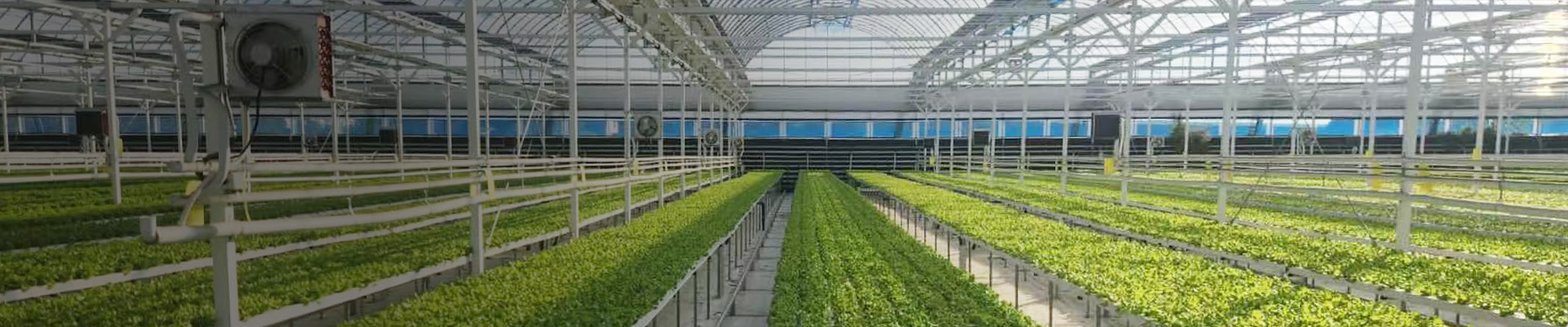
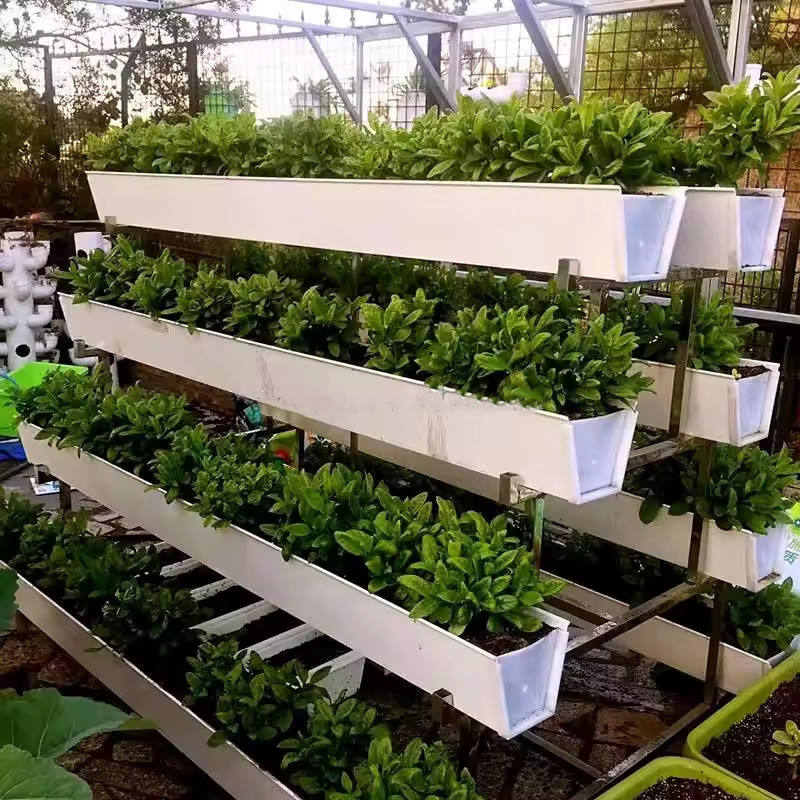


The Hydroponic Growing Gutter is a practical growing solution for greenhouse and soilless cultivation. Made from food-grade PVC, this gutter provides a structured growing space for substrates while its drainage channel helps remove excess irrigation water and nutrient solution.
Designed for controlled-environment agriculture, the Hydroponic Growing Gutter can be used for strawberries, tomatoes, cucumbers, peppers, leafy vegetables, and other crops grown with substrate-based irrigation systems. Different sizes and lengths can also be customized according to greenhouse layouts and crop requirements.
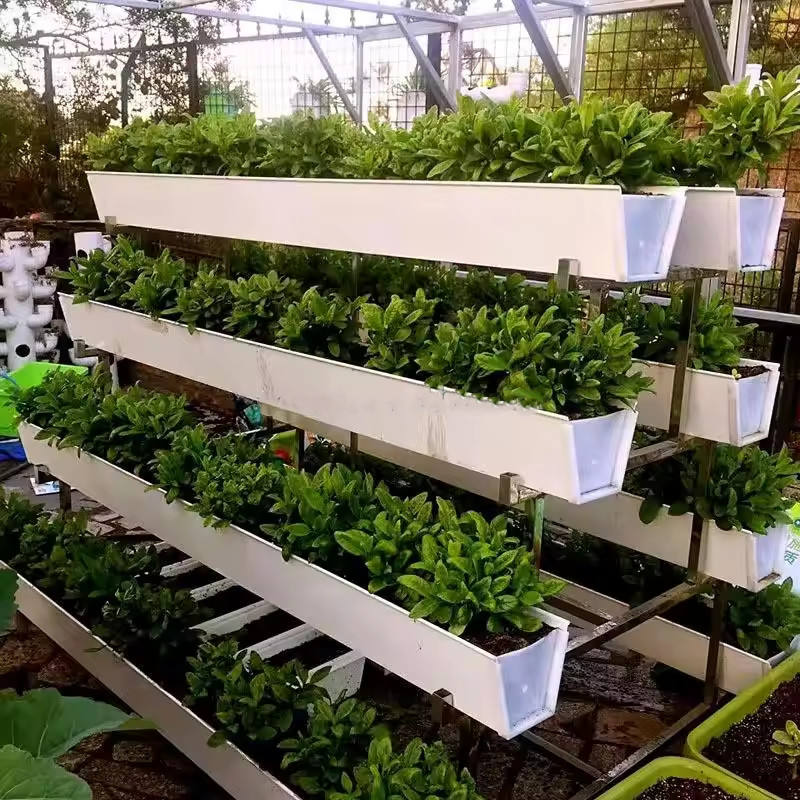
A Hydroponic Growing Gutter is a cultivation trough used in greenhouse soilless growing systems. Instead of planting crops directly in field soil, plants are grown in a suitable substrate such as coco coir or Rockwool.
The gutter supports the growing substrate and provides a defined path for irrigation and drainage. Water and nutrients can be delivered through drip irrigation, while excess solution is collected and discharged through the drainage channel.
A typical system includes:
PVC hydroponic growing gutter
Growing substrate
Drip irrigation pipes
Drainage channel
Drainage outlet and fittings
Supporting frame
Greenhouse structure
The PVC Hydroponic Gutter is made from food-grade PVC material, providing a practical and durable structure for greenhouse cultivation.
PVC is suitable for agricultural growing systems because it is lightweight, easy to install, and available in different sizes and lengths. The gutter can be produced in standard lengths such as 2.9 m and 5.8 m, while customized lengths can be supplied for different greenhouse projects.
A food-grade PVC structure also provides a smooth growing surface that is easy to organize and maintain as part of a commercial growing system.
An important feature of this Hydroponic Growing Gutter is its drainage channel.
During irrigation, water and nutrients are supplied to the growing substrate. Not all of the irrigation solution is retained by the substrate, so excess liquid needs to be removed from the growing area.
The drainage channel provides a defined path for excess water to move toward the drainage outlet.
This design can help with:
Collecting excess irrigation water
Guiding drainage toward the outlet
Reducing water accumulation inside the gutter
Supporting controlled irrigation and drainage
Keeping the growing area more organized
Actual drainage performance depends on the substrate, irrigation volume, gutter slope, and overall drainage system design.
The Hydroponic Growing Gutter is particularly suitable for substrate-based cultivation.
Common growing media include:
Coco coir
Rockwool
Other suitable horticultural substrates
The crop grows in the substrate rather than directly in soil. Irrigation equipment supplies water and nutrients to the root zone, while the drainage channel removes excess solution.
This makes the Hydroponic Substrate Gutter suitable for greenhouse fruit and vegetable production where growers want a structured growing environment with controlled irrigation.
One of the common applications of this system is strawberry cultivation.
A Hydroponic Strawberry Gutter provides an elevated growing area for strawberries and can be combined with substrate bags, coco coir, or other suitable growing media. Drip irrigation can deliver water and nutrients directly to the growing area.
For commercial greenhouse production, multiple gutters can be installed in rows or combined with A-frame supporting structures to make better use of available growing space.
The Strawberry Substrate Gutter can also help keep the growing area separated from ground soil, which is useful for controlled-environment strawberry production.
The Hydroponic Growing Gutter can be used for various greenhouse and soilless cultivation applications.
The gutter can be used as a Strawberry Growing Gutter for substrate-based strawberry cultivation. Coco coir and rockwool are among the possible growing media.
The system can also be adapted for fruiting crops such as tomatoes and cucumbers when the gutter, substrate, irrigation system, and supporting structure are properly configured.
Pepper and eggplant can also be cultivated in substrate-based greenhouse systems using suitable irrigation and drainage equipment.
Depending on the gutter dimensions and growing method, the system can also be used for leafy vegetables and herbs.
A Greenhouse Growing Gutter can be installed above ground and combined with A-frame or other support structures. This provides flexibility when arranging planting rows in a greenhouse.
The combination of substrate growing, irrigation equipment, and a drainage channel creates a structured system for delivering water and removing excess irrigation solution.
Because crops are grown in a substrate rather than directly in field soil, the system can help reduce dependence on traditional soil cultivation and avoid some soil-related continuous-cropping problems.
The Hydroponic Growing Gutter can be integrated with irrigation pipes, drainage fittings, supporting frames, and greenhouse structures to create a complete growing system.
Different gutter dimensions and lengths can be selected according to crop type, greenhouse space, and installation requirements. Customized solutions are also available for commercial projects.
Although both systems are used for soilless cultivation, a Hydroponic Growing Gutter and an NFT channel have different growing principles.
| Feature | Hydroponic Growing Gutter | NFT Channel |
|---|---|---|
| Growing method | Substrate-based growing | Nutrient Film Technique |
| Root environment | Growing medium | Roots contact flowing nutrient solution |
| Common crops | Strawberry, tomato, cucumber, pepper | Lettuce and leafy vegetables |
| Irrigation | Drip or other controlled irrigation | Thin film of nutrient solution |
| Drainage | Drainage channel/outlet | Channel return flow |
| Typical application | Greenhouse fruit and vegetable production | Hydroponic leafy vegetable production |
Therefore, if the product is designed to hold coco coir, rockwool, or another growing medium, Hydroponic Growing Gutter or Substrate Gutter is a more accurate product description than NFT Channel.
The PVC Hydroponic Gutter combines a structured growing trough with a dedicated drainage design for greenhouse cultivation.
Key features include:
Food-grade PVC material
Suitable for substrate cultivation
Integrated drainage channel
Compatible with drip irrigation
Suitable for strawberries and other greenhouse crops
Different sizes and lengths available
Suitable for commercial greenhouse systems
Compatible with A-frame and other support structures
Customized configurations available
Whether used as a Strawberry Substrate Gutter, greenhouse growing gutter, or general hydroponic growing gutter, the system can be configured according to the crop and greenhouse requirements.
A Hydroponic Growing Gutter is a growing trough used for greenhouse and soilless cultivation. It supports growing substrates and can include a drainage channel for removing excess irrigation water.
It can be used for strawberries, tomatoes, cucumbers, peppers, eggplants, leafy vegetables, herbs, and other suitable greenhouse crops.
Common options include coco coir and rockwool. The appropriate substrate depends on the crop and irrigation system.
No. A Hydroponic Growing Gutter is generally used for substrate-based cultivation, while an NFT Channel delivers a thin film of nutrient solution along the channel for plant roots.
This gutter is made from food-grade PVC and can be supplied in different sizes and lengths according to project requirements.
Yes. Gutter dimensions, lengths, supporting structures, irrigation components, and drainage configurations can be customized for different greenhouse layouts and growing requirements.

G and N is serving for more than 1,000 customers over 122 countries around the world, offering high-quality products and services to global customers.
Copyright © 2026 G AND N FORTUNE LIMITED All rights reserved.


