
 English

Products
Productos principales:Canal hidroponico NFT/Cubo holandes hidroponico/Canalon de fresa/
Maceta de red de plastico/Medios de cultivo Rockwool
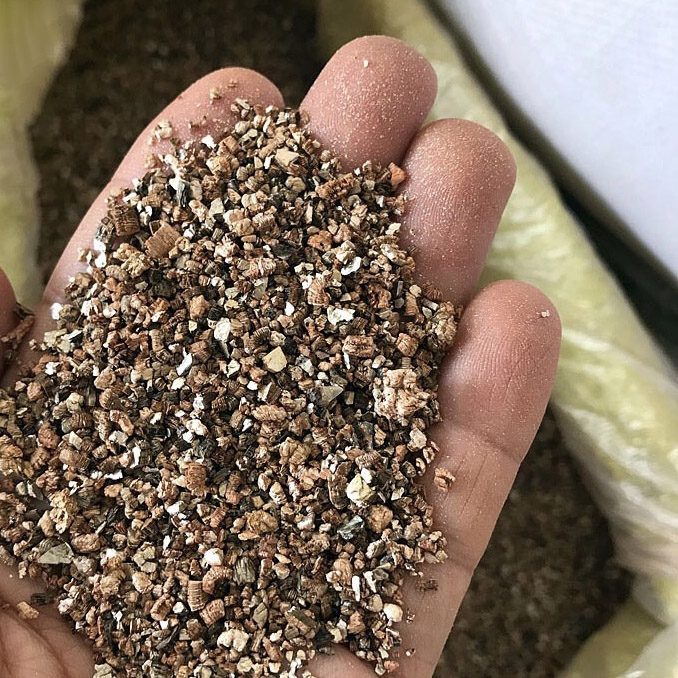


Vermiculite for Hydroponics is a lightweight and water-retentive growing medium widely used in hydroponic systems, seed starting, and soilless cultivation. Made from naturally occurring vermiculite mineral that expands under high temperatures, expanded vermiculite forms a porous structure that helps retain moisture, hold nutrients, and support healthy root development.
As a versatile hydroponic grow media, vermiculite is suitable for seed germination, plant propagation, nursery trays, and various soilless growing applications. It can be used alone for seed starting or mixed with coco coir and Perlite to create a growing medium with balanced moisture retention and aeration.
Available in fine, medium, and coarse grades, our vermiculite for plants can meet different growing requirements, from delicate seedlings to established plants. Whether you operate a commercial greenhouse, indoor hydroponic garden, or vertical farming project, expanded vermiculite provides a practical growing media solution.
| Item | Specifications |
|---|---|
| Product Name | Vermiculite for Hydroponics |
| Material | Expanded Natural Vermiculite |
| Origin | Natural Mineral |
| Available Grades | Fine / Medium / Coarse |
| Structure | Lightweight and Porous |
| Main Properties | Water Retention, Nutrient Retention, Aeration |
| Applications | Seed Starting, Plant Propagation, Soilless Cultivation |
| Growing Systems | Hydroponic Systems, Nursery Trays, Vertical Growing Systems |
| Suitable Crops | Leafy Greens, Herbs, Microgreens, Strawberries, Tomatoes, Peppers |
| Packaging | To Be Confirmed According to Order Requirements |
| Customization | Grade and Packaging Options to Be Confirmed |
Vermiculite is a naturally occurring hydrous phyllosilicate mineral. When heated to a high temperature, it expands into a lightweight material with a layered and porous structure. This processed material is known as expanded vermiculite.
Expanded vermiculite is widely used in horticulture because of its ability to absorb and retain water while holding certain plant nutrients.
In hydroponics and soilless cultivation, vermiculite serves as a growing medium that helps maintain moisture around plant roots and provides physical support for seedlings and developing plants.
Unlike traditional soil, expanded vermiculite is a mineral-based growing medium that can be combined with other substrates to create different growing environments.
One of the main advantages of vermiculite for hydroponics is its excellent water-holding capacity.
Its porous structure absorbs and retains moisture, helping maintain a more consistent moisture environment around plant roots.
This feature makes hydroponic vermiculite particularly useful for seed germination, young plant propagation, and crops that require consistent moisture.
Vermiculite has natural cation exchange capacity (CEC), allowing it to retain and exchange positively charged nutrient ions such as potassium, calcium, and magnesium.
This property helps reduce nutrient leaching and supports nutrient availability in growing media.
When used in hydroponic and soilless growing systems, vermiculite can complement nutrient solution management and provide a suitable environment for root development.
Expanded vermiculite has a lightweight, layered structure that is easy to handle, transport, and distribute in growing containers.
Its porous structure also creates spaces that can hold both moisture and air.
When combined with other growing media, such as perlite or coco coir, it can help achieve a suitable balance between water retention and aeration.
Fine-grade vermiculite is commonly used for seed starting because its soft, lightweight structure helps surround seeds and maintain moisture during germination.
It is also suitable for nursery trays and propagation applications where young plants require a consistent growing environment.
Different plants and growing stages require different substrate structures. Our vermiculite for plants is available in three main grades:
Fine Vermiculite: Suitable for seed germination, seed starting trays, and delicate seedlings.
Medium Vermiculite: Suitable for plant propagation, nursery applications, and general horticultural use.
Coarse Vermiculite: Suitable for growing media blends that require a more open structure and additional physical support.
The appropriate grade should be selected according to the crop, container size, and growing method.
Expanded vermiculite can be used in various horticultural and soilless cultivation applications.
It can be used alone for seed starting or blended with coco coir and perlite to adjust the moisture retention and drainage characteristics of a growing medium.
Its versatility makes it suitable for both small indoor growing projects and commercial horticultural applications.
Fine vermiculite is an effective growing medium for seed starting because it retains moisture around seeds and helps create a suitable environment for germination.
How to use vermiculite for seed starting:
Fill a seed tray or propagation container with fine vermiculite.
Moisten the growing medium evenly.
Place seeds into the prepared cells.
Cover the seeds lightly with a thin layer of vermiculite when appropriate for the seed type.
Maintain suitable temperature and moisture conditions.
Monitor seed germination and prepare seedlings for transplanting.
Vermiculite for hydroponics can be used in propagation trays and nursery containers to support young plants during early growth.
Its moisture-retaining properties help maintain a consistent environment around developing roots.
Medium-grade vermiculite is commonly considered for general propagation applications.
Vermiculite can be incorporated into soilless growing media for leafy vegetables, herbs, strawberries, and other crops.
When blended with coco coir or perlite, it helps adjust moisture retention and the physical structure of the growing medium.
The exact mixture should be selected according to crop requirements, irrigation frequency, and container design.
In NFT (Nutrient Film Technique) and DWC (Deep Water Culture) systems, vermiculite may be used in small quantities within net pots or seed-starting and propagation applications to support young plants.
However, vermiculite is not the main nutrient delivery mechanism in these systems. NFT relies on a flowing nutrient film, while DWC provides nutrient solution around suspended plant roots. The growing medium should be compatible with the specific system design and should not obstruct water circulation.
Expanded vermiculite can be used in suitable planting containers and propagation units within vertical growing systems.
Its lightweight structure makes it convenient for filling small containers and supporting young plants.
For mature plants, the growing medium should be selected according to the container design, irrigation method, and root support requirements.
Choosing the correct vermiculite grade is important for achieving suitable moisture retention and growing media structure.
| Grade | Main Characteristics | Recommended Applications |
|---|---|---|
| Fine | Smaller particles and a fine texture | Seed starting, germination, delicate seedlings |
| Medium | Balanced particle size | Plant propagation, nursery trays, general horticulture |
| Coarse | Larger particles and a more open structure | Growing media blends, larger containers, selected mature plant applications |
The best grade depends on the plant species, growing stage, container size, and irrigation requirements.
Vermiculite is often blended with other substrates to adjust water retention, drainage, and aeration.
A commonly used example is a mixture of:
60% coco coir
40% vermiculite
Coco coir provides a fibrous growing structure, while vermiculite improves moisture retention and nutrient-holding capacity.
This mixture can be considered for selected soilless growing applications, but the ratio should be adjusted according to crop requirements, irrigation frequency, and environmental conditions.
Vermiculite and perlite have different physical properties.
Vermiculite retains more moisture and nutrients, while perlite is primarily used to improve aeration and drainage.
Combining the two can help create a growing medium with a more balanced moisture and air environment.
Both vermiculite and perlite are widely used in horticulture and soilless growing systems, but they serve different purposes.
| Comparison | Vermiculite | Perlite |
|---|---|---|
| Material | Expanded natural mineral | Expanded volcanic glass |
| Water Retention | High | Relatively low |
| Nutrient Retention | Has cation exchange capacity | Very limited nutrient retention |
| Aeration | Provides pore spaces | Helps improve aeration |
| Main Applications | Seed starting, propagation, moisture retention | Drainage, aeration, growing media blends |
| Common Use | Used alone or mixed with other substrates | Commonly mixed with coco coir or other media |
Vermiculite is generally preferred when moisture retention is a priority, while perlite is more suitable when improved drainage and aeration are needed.
Many growers combine both materials to achieve growing media properties that better match their crops.
We provide expanded vermiculite for horticultural and soilless growing applications, offering different grades for various planting requirements.
Multiple Grade Options: Fine, medium, and coarse vermiculite for different growing stages.
Versatile Applications: Suitable for seed starting, propagation, nursery trays, and growing media blends.
Moisture Retention: Porous structure helps maintain moisture around plant roots.
Nutrient Retention: Natural cation exchange properties support nutrient retention in growing media.
Flexible Growing Solutions: Can be used alone or combined with coco coir and perlite.
Suitable for Different Growing Projects: Applicable to indoor growing, greenhouse cultivation, and commercial horticulture.
Whether you need fine vermiculite for seed germination or larger grades for horticultural growing media, we can help you select a suitable option according to your application requirements.
Vermiculite is used as a growing medium for seed starting, plant propagation, and selected soilless cultivation applications. It retains moisture and certain nutrients while providing a lightweight structure for developing roots.
Yes. Horticultural vermiculite can be useful in hydroponic-related applications, particularly seed germination and propagation. Its water-retaining properties help maintain moisture around young roots. However, its suitability depends on the hydroponic system design.
Yes. Vermiculite can be used alone for seed germination and certain propagation applications. For mature plants, it is often combined with coco coir, perlite, or other substrates to achieve suitable drainage, aeration, and root support.
Fine vermiculite is mainly used for seed starting and delicate seedlings. Medium vermiculite is suitable for general propagation and nursery applications. Coarse vermiculite is used in selected growing media blends and applications requiring a more open substrate structure.
Neither material is universally better. Vermiculite has higher water and nutrient retention properties, while perlite is mainly used to improve aeration and drainage. The appropriate choice depends on the crop and growing system.
Yes. Vermiculite can be mixed with coco coir to improve moisture retention and adjust the physical properties of the growing medium. A 60% coco coir and 40% vermiculite mixture is one possible starting formulation, but the ideal ratio depends on crop and irrigation conditions.
Reuse depends on the condition of the material and the previous growing environment. Vermiculite may retain roots, salts, organic residues, or pathogens after cultivation. Inspect it carefully and use appropriate cleaning or replacement practices. Fine particles may also break down over time.
You can source expanded vermiculite in different grades for commercial greenhouse cultivation, seed starting, plant propagation, and soilless growing projects. When purchasing in bulk, confirm particle size, product specifications, packaging, and supply requirements with the manufacturer.
Looking for reliable Vermiculite for Hydroponics for seed starting, propagation, or commercial soilless cultivation?
Our expanded vermiculite is available in fine, medium, and coarse grades to meet different horticultural requirements. Whether you are preparing seed trays, developing a greenhouse growing project, or blending your own hydroponic growing media, we can help you identify a suitable grade.
Contact us to discuss your vermiculite requirements, particle size options, and bulk purchasing needs.

G and N is serving for more than 1,000 customers over 122 countries around the world, offering high-quality products and services to global customers.
Copyright © 2026 G AND N FORTUNE LIMITED All rights reserved.