
 English

News
Focus on G AND N FORTUNE LIMITED - Get to know the new information of the industry quickly!

2026-11-17 10:01:14
Is vertical farming and hydroponics the same? No. Although these two agricultural concepts are closely related and often used together, they are not the same. Vertical farming is a growing method that maximizes planting space by arranging crops in multiple vertical layers, while hydroponics is a soilless cultivation technique that uses nutrient-rich water to supply plants with essential nutrients.
In modern agriculture, vertical farming often uses hydroponic systems to grow vegetables and herbs efficiently in limited spaces. However, vertical farms can also use aeroponics or substrate-based growing methods, while hydroponics does not necessarily require vertical structures.
Understanding the difference between vertical farming and hydroponics can help growers choose the right growing method, equipment, and system configuration for their agricultural projects.
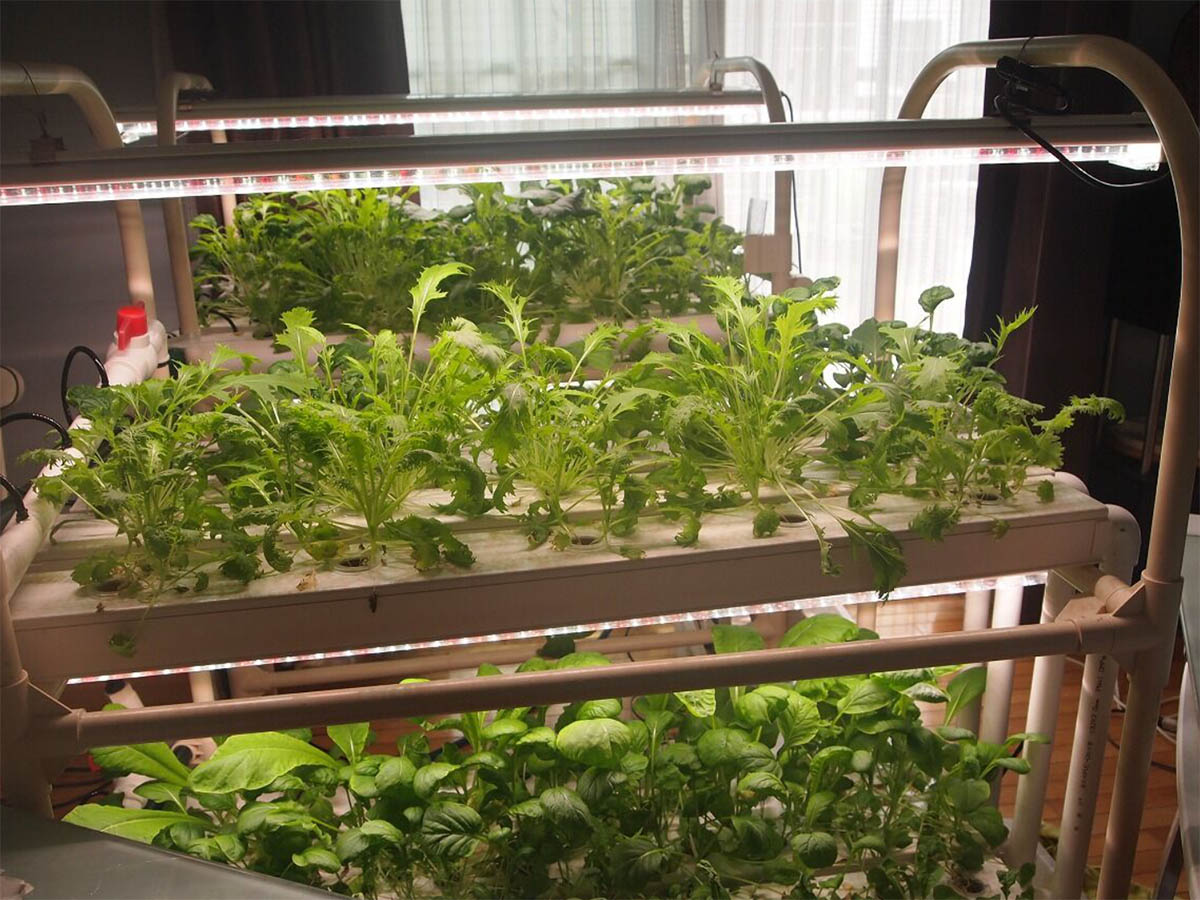
Vertical farming is an agricultural production method that grows crops in vertically stacked layers, towers, or multi-level structures rather than relying entirely on traditional horizontal farmland.
The main purpose of vertical farming is to maximize the use of available growing space. By arranging plants vertically, growers can increase the number of planting positions within a limited floor area.
Vertical farming is commonly used in:
Indoor farms
Urban agriculture projects
Commercial greenhouse facilities
Controlled-environment agriculture
Small-space home gardening
Commercial vegetable production
1. Efficient Space Utilization
Vertical farming uses multi-layer shelves, growing towers, or stacked cultivation structures to increase planting density. This is especially useful in cities and indoor environments where available floor space is limited.
2. Flexible Growing Methods
Vertical farming does not depend on one specific cultivation technology. Depending on crop requirements and project design, growers can use hydroponics, aeroponics, or substrate-based growing systems.
3. Controlled Growing Environment
Indoor vertical farms may use LED grow lights, irrigation systems, ventilation, and environmental monitoring equipment to manage growing conditions.
4. Flexible Crop Production
Vertical farming is commonly used to grow leafy greens, herbs, strawberries, and selected vegetables. Crop selection depends on available space, lighting, root development, and structural requirements.
Hydroponics is a soilless cultivation technique in which plants receive water and essential nutrients through a nutrient solution instead of obtaining them from traditional soil.
In a typical hydroponic system, plant roots are supplied with nutrient-rich water. Some systems allow roots to grow directly in the nutrient solution, while others use growing media such as coco coir, perlite, or Rockwool to support the plants.
Hydroponics is used in home gardens, greenhouses, indoor farms, and commercial agricultural facilities.
1. NFT Hydroponic System
NFT stands for Nutrient Film Technique. It uses slightly sloped growing channels to allow a thin film of nutrient solution to flow along the bottom of the channels and reach plant roots.
NFT hydroponic systems are commonly used for lettuce, leafy greens, and herbs.
2. DWC Hydroponic System
DWC stands for Deep Water Culture. In this system, plant roots are suspended in nutrient-rich water, usually with aeration to provide oxygen.
It is commonly used for leafy vegetables and other suitable crops.
3. Dutch Bucket System
The Dutch Bucket System uses individual containers filled with growing media. Nutrient solution is delivered through drip irrigation, while excess solution drains from the buckets.
It is commonly used for larger fruiting crops such as tomatoes, cucumbers, and peppers.
4. Vertical Tower Hydroponic System
A vertical tower hydroponic system arranges planting positions around a vertical structure. Nutrient solution is distributed through the tower to supply plants at different levels.
It is suitable for compact indoor gardens, balconies, greenhouses, and vertical farming projects.
The main difference between vertical farming and hydroponics is that they describe two different aspects of crop production.
Vertical farming focuses on how plants are arranged in a growing space, while hydroponics focuses on how plants receive water and nutrients.
| Comparison | Vertical Farming | Hydroponics |
|---|---|---|
| Definition | A growing method using vertically arranged planting structures | A soilless cultivation technique |
| Main Purpose | Maximize planting space | Supply plants with water and nutrients without soil |
| Growing Structure | Multi-layer shelves, towers, stacked systems | NFT Channels, DWC tanks, buckets, towers |
| Growing Medium | Soil, substrate, or soilless systems, depending on design | Nutrient solution, sometimes with growing media |
| Planting Direction | Primarily vertical | Horizontal or vertical |
| Common Applications | Indoor farms, urban agriculture, vertical greenhouses | Home gardens, greenhouses, commercial farms |
| Common Crops | Leafy greens, herbs, strawberries, selected vegetables | Leafy greens, herbs, tomatoes, cucumbers, peppers |
A vertical farm can use different cultivation methods, including:
Hydroponics: Plants receive nutrients through a water-based nutrient solution.
Aeroponics: Plant roots are suspended in the air and supplied with nutrient-rich mist.
Substrate Growing: Plants grow in media such as coco coir, perlite, or rockwool, with water and nutrients supplied through irrigation.
The growing method depends on the crop, production goals, equipment, and available resources.
Many hydroponic systems use horizontal growing channels, containers, or planting beds. For example, traditional NFT hydroponic systems often arrange PVC growing channels horizontally across a greenhouse.
Hydroponics can therefore be used in both horizontal and vertical growing layouts.
Vertical farming and hydroponics can be combined to create a Vertical Hydroponic Farming System.
In this setup, plants are arranged in multiple vertical planting positions, while a hydroponic irrigation system supplies water and nutrients throughout the structure.
A typical vertical hydroponic system includes:
Vertical Growing Structure: Supports multiple planting positions and holds plants securely.
Water Reservoir: Stores nutrient solution for plant growth.
Water Pump: Moves nutrient solution from the reservoir to the growing structure.
Irrigation System: Distributes nutrient solution to different planting levels.
Plant Holders or Net Pots: Support seedlings and growing plants.
Nutrient Solution: Provides essential elements required for plant development.
Optional LED Grow Lights: Provide supplemental lighting for indoor cultivation.
The working process generally includes the following steps:
Step 1: Prepare the Nutrient Solution
Fill the water reservoir with water and prepare the nutrient solution according to crop requirements.
Step 2: Pump Nutrient Solution to the Growing Structure
A water pump transfers the nutrient solution from the reservoir to the upper section or distribution point of the vertical growing tower.
Step 3: Distribute Water to Planting Positions
The irrigation structure distributes nutrient solution to the different planting positions, allowing plant roots to absorb water and nutrients.
Step 4: Collect and Recirculate Nutrient Solution
In a recirculating configuration, excess nutrient solution returns to the reservoir for reuse.
Step 5: Monitor Growing Conditions
Growers regularly check water levels, nutrient concentration, pH, and irrigation performance to maintain suitable growing conditions.
This combination allows growers to use vertical space while applying hydroponic cultivation technology.
Combining vertical farming with hydroponics offers several advantages for modern agricultural production.
Vertical structures provide multiple planting positions within a smaller floor area. This makes vertical hydroponic farming suitable for indoor agriculture, urban farming, and locations with limited growing space.
Many hydroponic systems use recirculating nutrient solution, allowing unused water and nutrients to return to the reservoir. This can reduce water waste compared with non-recirculating growing methods.
Actual water consumption depends on crop type, environmental conditions, and system design.
Hydroponic systems do not require traditional agricultural soil. This allows growers to establish growing areas in indoor environments, rooftops, greenhouses, and urban locations where suitable soil may not be available.
Vertical hydroponic systems can be installed in homes, greenhouses, indoor farms, and commercial growing facilities. Optional LED lighting and environmental control equipment can further support indoor cultivation.
Multiple planting positions and integrated irrigation structures help growers organize crop layouts and manage nutrient delivery.
This is particularly useful for small-scale commercial farms and controlled growing projects.
Vertical hydroponic systems are commonly used for crops that can grow successfully in relatively compact planting positions.
Common choices include:
Lettuce
Spinach
Kale
Pak choi
Popular herbs include:
Basil
Mint
Parsley
Cilantro
Some vertical hydroponic systems can also support:
Strawberries
Peppers
Selected tomato varieties
However, larger fruiting plants may require more root space, stronger structural support, and appropriate planting positions. Growers should confirm crop compatibility before selecting a tower system.
Both vertical hydroponic towers and horizontal NFT systems use nutrient solution for soilless cultivation, but their structures and space requirements are different.
| Comparison | Vertical Hydroponic System | Horizontal NFT System |
|---|---|---|
| Growing Structure | Vertical towers or stacked modules | Horizontal NFT channels |
| Space Utilization | Makes use of vertical space | Uses horizontal growing areas |
| Planting Positions | Distributed around vertical structures | Arranged along growing channels |
| Irrigation | Internal or integrated water distribution | Thin nutrient solution film flows through channels |
| Common Applications | Indoor gardens, balconies, vertical farms | Greenhouses and commercial vegetable farms |
| Main Consideration | Plant spacing, light distribution, tower stability | Channel slope, nutrient flow, root space |
A vertical tower is often suitable for compact growing areas, while horizontal NFT channels can be more practical for long growing rows and certain commercial greenhouse layouts.
The best choice depends on crop type, growing area, installation conditions, and production requirements.
For growers interested in combining vertical farming with hydroponics, the G&N Vertical Tower provides an integrated solution for compact soilless cultivation.
As an upgraded 3rd-generation hydroponic growing system, it features a modular tower structure, a stable base with fixing clips, a zigzag water distribution system, and a large-capacity 60L water tank.
Key product features include:
Modular Tower Structure: Multiple components connect to form a vertical growing system.
Zigzag Irrigation Design: Distributes nutrient solution to different planting positions.
60L Water Tank: Provides integrated nutrient solution storage.
Half Net Pot Design: Helps support plants in their growing positions.
Stable Base: Fixing clips help secure the tower structure.
Indoor and Outdoor Applications: Can be combined with LED grow lights or optional insect nets according to the growing environment.
The G&N Vertical Tower is suitable for indoor gardening, greenhouse hydroponics, urban agriculture, educational projects, and selected commercial vertical farming applications.
Whether you are planning a home hydroponic garden or exploring a compact vertical hydroponic farming solution, the Vertical Tower offers a practical way to combine vertical space utilization with soilless cultivation.
Contact G&N to learn more about the Vertical Tower and explore hydroponic growing solutions for your project.
No. Vertical farming is a growing method that arranges plants in vertically stacked structures to maximize space utilization. Hydroponics is a soilless cultivation technique that supplies plants with nutrients through water. They are different concepts but can be combined in vertical hydroponic farming.
Yes. Vertical farming can use soil, substrate-based growing, aeroponics, or other cultivation methods. Hydroponics is one of the most common techniques used in vertical farming, but it is not the only option.
Yes. Hydroponics can be used in horizontal NFT channels, DWC systems, Dutch Buckets, and other growing structures. Vertical planting is not a requirement for hydroponic cultivation.
Vertical hydroponic farming combines vertical planting structures with hydroponic nutrient delivery. Plants grow in multiple vertical positions while receiving water and nutrients through an integrated irrigation system.
Vertical farming focuses on arranging crops in vertical layers or structures. Indoor farming describes growing crops inside buildings or enclosed environments. A farm can be both indoor and vertical, but neither concept necessarily requires the other.
Yes. Small vertical hydroponic systems can be suitable for beginners, especially when they have modular structures and integrated irrigation. However, growers still need to monitor water levels, nutrient concentration, pH, lighting, and plant health.
Lettuce, spinach, kale, pak choi, basil, mint, parsley, and other leafy greens and herbs are commonly suitable. Strawberries and selected fruiting vegetables can also be grown in compatible systems with sufficient root space and structural support.
Vertical farming itself does not automatically determine water consumption. However, when combined with recirculating hydroponic systems, it can reduce water waste by collecting and reusing nutrient solution. Actual water savings depend on system design and operating conditions.
A typical system requires a vertical growing structure, water reservoir, pump, irrigation components, plant holders or net pots, and nutrient solution. Indoor systems may also need LED grow lights and environmental monitoring equipment.
A vertical tower arranges planting positions around a vertical structure, while an NFT channel is generally a horizontal growing trough that carries a thin film of nutrient solution. Both can be used in hydroponics, but they are designed for different growing layouts.

G and N is serving for more than 1,000 customers over 122 countries around the world, offering high-quality products and services to global customers.
Copyright © 2026 G AND N FORTUNE LIMITED All rights reserved.


