

 English

News
Focus on G AND N FORTUNE LIMITED - Get to know the new information of the industry quickly!

2026-10-08 16:39:19
Learning how to make a NFT hydroponic system starts with understanding how the Nutrient Film Technique works. An NFT hydroponic system uses a slightly inclined growing channel to allow a thin film of nutrient solution to flow continuously past plant roots.
A basic system consists of an NFT hydroponic channel, nutrient reservoir, water pump, irrigation pipe, drainage pipe, net pots, growing media, and nutrient solution. The nutrient solution moves from the reservoir to the channel, passes along the root zone, and then returns to the reservoir.
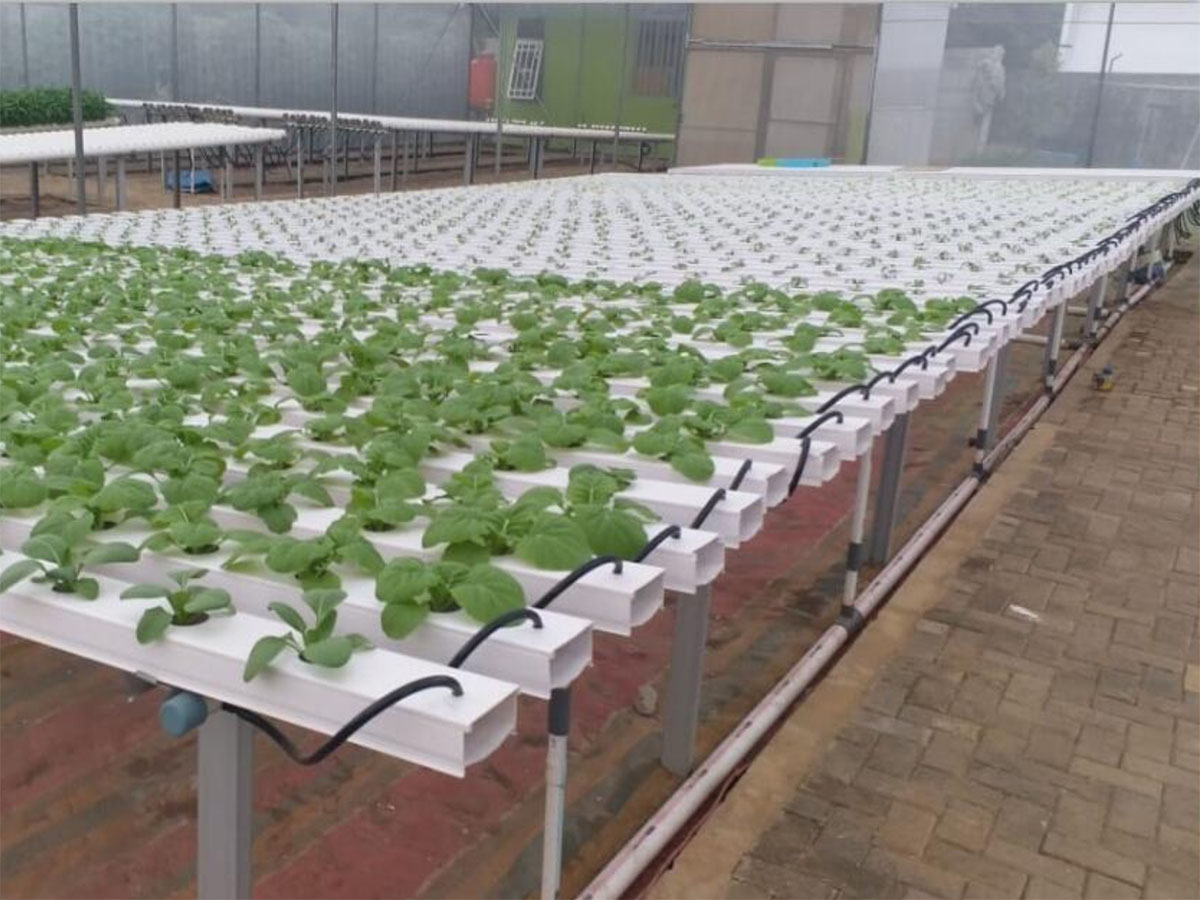
An NFT Hydroponic System is a soilless growing system based on the Nutrient Film Technique. Instead of growing plants in soil, the system delivers water and nutrients directly to the root zone through a shallow flowing film of nutrient solution.
The basic circulation is:
Nutrient Reservoir → Water Pump → NFT Channel → Plant Roots → Drainage → Reservoir
The growing channel is installed with a slight slope so that the nutrient solution can flow from the inlet toward the drainage end.
Before building an NFT Hydroponic System, prepare the main components.
The NFT Hydroponic Channel is the main growing structure. It supports the plants and provides a path for the nutrient solution to flow along the bottom.
Commercial NFT channels are commonly made from PVC and can be supplied in different lengths and configurations.
The reservoir stores the nutrient solution and collects the solution returning from the growing channels.
The reservoir should be large enough for the number of channels and plants in the system.
A water pump moves nutrient solution from the reservoir to the upper end of the NFT Channel.
The pump capacity should be selected according to the channel length, number of channels, elevation, and required flow rate.
The irrigation pipe connects the water pump to the inlet of the NFT hydroponic channels.
Multiple channels can be connected to a manifold when building a larger NFT Hydroponic System.
The drainage pipe returns nutrient solution from the NFT channels back to the reservoir.
A suitable drainage design helps maintain continuous circulation and makes the system easier to manage.
Net pots hold the plants in the openings of the NFT channel. They allow roots to grow downward into the channel while keeping the plant supported.
Small amounts of growing media can be used to support seedlings during germination and early growth.
Common options include:
The nutrient solution supplies water and essential plant nutrients to the roots.
The nutrient concentration and pH should be managed according to the crop and growing stage.
The first step in learning how to make a NFT hydroponic system is choosing a suitable growing channel.
Consider:
Channel length
Channel width and depth
Number of planting sites
Material
Greenhouse or indoor layout
Crop type
Drainage design
A PVC NFT Hydroponic Channel is a common option because it provides a structured growing path and can be integrated with irrigation and drainage fittings.
Place the nutrient reservoir in a suitable position below the growing channels.
The reservoir should be easy to access for:
Adding water
Adjusting nutrients
Checking pH
Cleaning
Maintaining the pump
The return drainage from the NFT channels should be able to flow back into the reservoir.
Place the water pump inside the nutrient reservoir.
Connect the pump to the irrigation pipe and route the pipe to the inlet of the NFT Hydroponic Channel.
For multiple channels, a manifold can be used to distribute nutrient solution between different growing lines.
Install the NFT Channels on a suitable support structure.
The channel should have a slight slope from the nutrient solution inlet toward the drainage end. This allows gravity to help the nutrient solution move through the channel.
The exact slope depends on the channel design, length, flow rate, crop, and installation conditions. It should be tested after installation rather than treated as a universal fixed value.
Connect the drainage outlet at the lower end of each NFT Hydroponic Channel to a return pipe.
The drainage pipe should lead back to the nutrient reservoir.
Check that the return path is large enough and does not create unnecessary water accumulation inside the channel.
Place the net pots into the planting openings of the NFT channel.
The openings should provide enough space for the plant roots to grow downward into the channel while keeping the upper part of the plant supported.
The spacing between planting sites depends on the crop.
Start the plants separately using a suitable growing medium such as rockwool or a hydroponic grow sponge.
Once the seedlings have developed sufficient roots, transfer them into the net pots.
The roots should be positioned so they can reach the nutrient solution flowing through the NFT channel.
Fill the reservoir with water and prepare the nutrient solution according to the crop requirements.
Start the water pump and check the entire circulation path:
Reservoir → Pump → Irrigation Pipe → NFT Channel → Drainage → Reservoir
Make sure the nutrient solution flows smoothly through the channel and returns to the reservoir.
Before adding a large number of plants, inspect the system carefully.
Check for:
Water leaks
Uneven flow
Blocked drainage
Pump operation
Pipe connections
Channel slope
Planting site position
Water returning to the reservoir
Testing the system before full operation can help identify installation problems early.
Once the system is running, the water pump continuously moves nutrient solution from the reservoir to the NFT channel.
The solution flows along the bottom of the slightly inclined channel as a thin film. Plant roots can access the nutrient solution while also remaining exposed to air inside the channel.
The nutrient solution then reaches the drainage end and returns to the reservoir.
This creates a recirculating NFT Hydroponic System.
NFT Hydroponics is particularly suitable for crops with relatively small root systems and shorter growing cycles.
Common crops include:
Lettuce
Spinach
Kale
Pak choi
Mustard greens
Basil
Mint
Cilantro
Other leafy greens and herbs
Large fruiting crops such as tomatoes and cucumbers generally require more root support and are often better suited to systems such as Dutch Bucket Hydroponics.
Building an NFT Hydroponic System is only the first step. Regular maintenance is important for stable operation.
Inspect the NFT channel regularly to make sure the nutrient solution is flowing properly.
Blocked pipes, pump problems, algae, or debris can interrupt the circulation.
Check the nutrient concentration and pH according to the crop's requirements.
Water consumption and nutrient uptake can change as plants grow.
The NFT Hydroponic Channel should be cleaned periodically to remove plant debris, roots, algae, and other buildup.
Inspect the water pump, irrigation pipes, drainage pipes, and connections regularly.
A reliable circulation system is essential because the roots depend on a continuous supply of water, nutrients, and oxygen.
If some channels receive more solution than others, check the pump, manifold, pipe size, channel slope, and connections.
If water accumulates in the channel, inspect the drainage outlet and return pipe. The channel slope and flow rate may also need adjustment.
Because NFT relies on circulating nutrient solution, pump failure can interrupt nutrient and water delivery. Regular inspection and appropriate system planning are important.
As plants grow, roots can extend into the channel and interfere with water flow. Regular inspection can help identify excessive root buildup.
For commercial NFT Hydroponics, the system can be expanded by installing multiple channels connected to centralized irrigation and drainage.
A commercial system may include:
Multiple NFT hydroponic channels
Nutrient reservoir
Water pumps
Irrigation manifold
Drainage pipes
Net pots
Growing racks
Greenhouse structure
Monitoring and control equipment
A Commercial NFT Hydroponic System can be designed horizontally or vertically depending on the greenhouse layout, available space, crop type, and management requirements.
The basic components include an NFT hydroponic channel, nutrient reservoir, water pump, irrigation pipe, drainage pipe, net pots, growing media, and nutrient solution.
Nutrient solution is pumped from the reservoir to the upper end of the channel. It then flows along the bottom of the slightly inclined channel and returns to the reservoir through the drainage system.
Leafy greens and herbs such as lettuce, spinach, kale, pak choi, basil, and mint are commonly suitable for NFT systems.
No. NFT is a soilless growing method. Plants receive water and nutrients through the circulating nutrient solution.
Yes, a recirculating NFT system normally uses a water pump to move nutrient solution from the reservoir to the growing channels.
Yes. A small NFT system can be built using a suitable channel, reservoir, pump, pipes, net pots, and nutrient solution. Larger commercial systems require more careful planning of irrigation, drainage, support structures, and crop spacing.
NFT uses a thin film of nutrient solution flowing through a growing channel, while Dutch Bucket Hydroponics usually uses individual buckets filled with growing media and drip irrigation. NFT is commonly used for leafy greens, while Dutch buckets are often used for larger fruiting crops.

G and N is serving for more than 1,000 customers over 122 countries around the world, offering high-quality products and services to global customers.
Copyright © 2026 G AND N FORTUNE LIMITED All rights reserved.


