

 English

News
Focus on G AND N FORTUNE LIMITED - Get to know the new information of the industry quickly!

2026-08-27 10:20:40
A NFT hydroponic system, or Nutrient Film Technique hydroponic system, is a soilless growing method that continuously circulates a thin film of nutrient solution through growing channels. Plant roots are exposed to the flowing nutrient solution while also receiving oxygen from the air inside the channel.
A typical NFT hydroponic system consists of a water reservoir, water pump, Irrigation Pipes, NFT Channels, growing pots, and a drainage system. The nutrient solution flows from the reservoir through the NFT hydroponic channels and returns to the reservoir, creating a continuous growing cycle.
NFT hydroponics is particularly suitable for leafy vegetables and herbs because it provides efficient water and nutrient delivery while making good use of growing space.
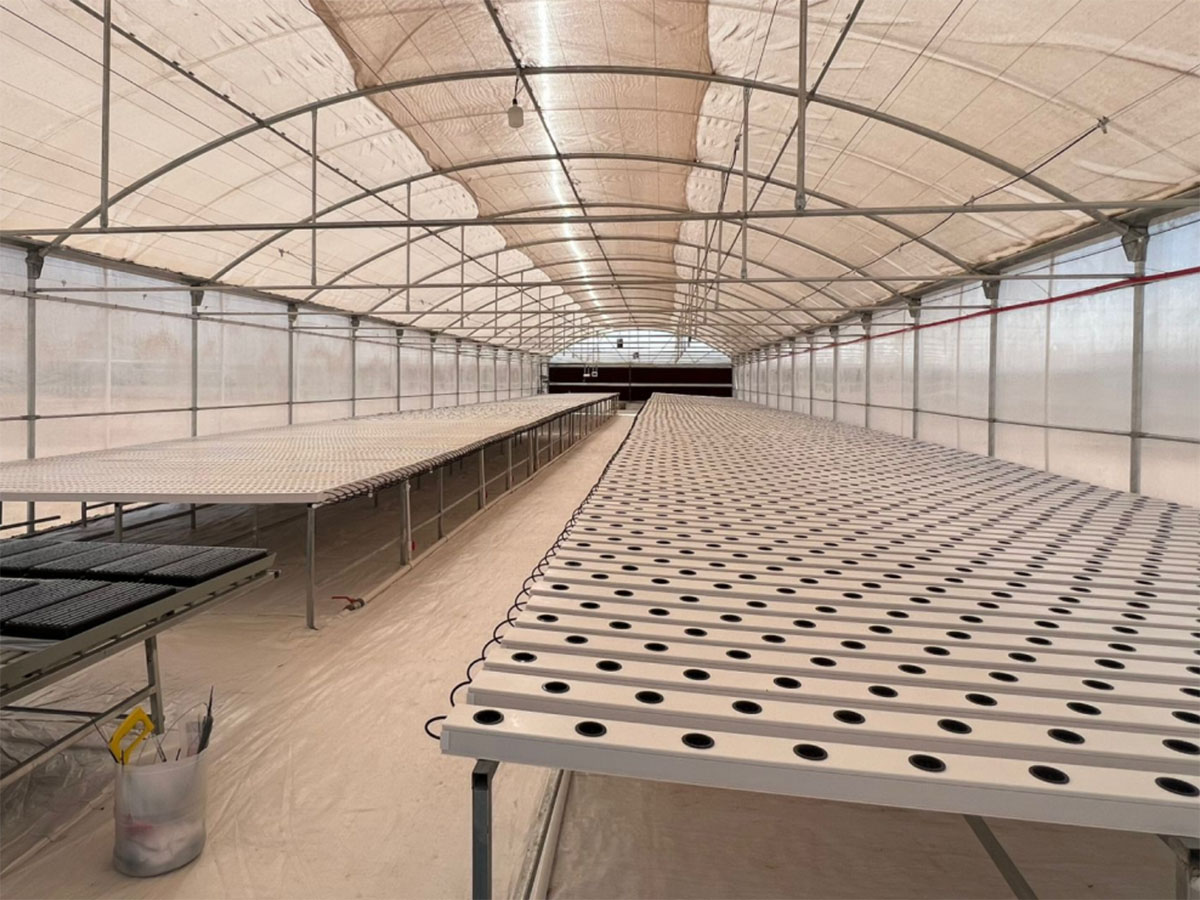
Before learning how to set up a NFT hydroponic system, prepare the main components required for water circulation and plant support.
The NFT channel is the main growing component of the system. It provides a controlled pathway for the nutrient solution to flow beneath the plant roots.
Common options include:
Hydroponic NFT channels
NFT growing channels
Hydroponic gutters
PVC NFT channels
Food-grade PVC channels are commonly used for commercial hydroponic applications because they are lightweight, durable, easy to clean, and suitable for long-term greenhouse use.
The water reservoir stores the water and nutrient solution used by the system. The reservoir should have enough capacity for the number and size of NFT channels being installed.
A covered reservoir can also help reduce light exposure and keep the nutrient solution cleaner.
A hydroponic water pump moves nutrient solution from the reservoir to the upper end of the NFT channels.
The pump should provide an appropriate flow rate for the number of channels connected to the system.
Irrigation pipes distribute nutrient solution from the pump to each NFT channel.
You may need:
Main irrigation pipe
Branch pipes
Connectors
Valves
End fittings
A properly designed irrigation system helps provide consistent nutrient solution to every growing channel.
Net pots hold the plants in the openings of the NFT channel. The roots grow downward through the net pot and reach the nutrient solution flowing through the channel.
Choose a location with sufficient sunlight, good ventilation, and convenient access to water and electricity.
For commercial production, NFT hydroponic systems are commonly installed inside greenhouses. Indoor systems can also use LED grow lights to provide the required light conditions.
The installation area should provide enough space for:
NFT channels
Water reservoir
Pump
Irrigation pipes
Drainage pipes
Plant maintenance
Install the NFT hydroponic channels on a suitable growing rack.
The channels should have a slight slope from the nutrient solution inlet toward the drainage end. This allows the nutrient solution to flow through the channel by gravity.
The growing channels should be securely fixed to prevent movement or deformation during operation.
Place the reservoir below the NFT channels so that the nutrient solution can return to the tank after passing through the growing channels.
The reservoir should be easy to access for:
Adding water
Adjusting nutrients
Checking water quality
Cleaning the system
Install the water pump inside the reservoir and connect it to the main irrigation pipe.
The pump sends nutrient solution from the reservoir to the upper end of the NFT growing channels.
For larger commercial systems, multiple channels can be connected through a distribution manifold.
Connect the irrigation pipe to the inlet of each NFT channel.
At the opposite end, install the drainage outlet so that nutrient solution can flow back into the reservoir.
The complete circulation should be:
Reservoir → Water Pump → Irrigation Pipe → NFT Channel → Drainage Pipe → Reservoir
Check every connection carefully to prevent leaks.
Place the net pots into the planting holes of the NFT channel.
Young seedlings can be transferred into the system once they have developed a suitable root system.
Common NFT crops include:
Lettuce
Spinach
Kale
Pakchoi
Arugula
Herbs
NFT is particularly effective for leafy vegetables because these crops generally have relatively small root systems and short growing cycles.
Fill the reservoir with clean water and add the appropriate hydroponic nutrients according to the crop requirements.
Before planting, check important water parameters such as:
pH
EC
Water temperature
The nutrient concentration should be monitored regularly throughout the growing cycle.
Turn on the water pump and check the nutrient solution flow.
Make sure the solution:
Reaches every NFT channel.
Forms a thin layer along the bottom of the channel.
Flows smoothly toward the drainage end.
Returns to the reservoir.
If water accumulates inside a channel, check the channel slope, drainage outlet, and pipe connections.
The operating principle of an NFT hydroponic system is relatively simple.
The water pump continuously transports nutrient solution from the reservoir to the NFT channels. The solution then flows as a thin film along the bottom of each channel.
Plant roots contact the nutrient solution and absorb:
Water
Nitrogen
Phosphorus
Potassium
Other essential nutrients
At the same time, the exposed root area receives oxygen from the air inside the channel.
After passing through the channel, the nutrient solution returns to the reservoir and is recirculated.
This makes NFT a highly efficient recirculating hydroponic system.
Because the nutrient solution is continuously recirculated, an NFT hydroponic system can use significantly less water than conventional soil cultivation when properly designed and managed.
Water is delivered directly to the root zone rather than being distributed throughout an entire field.
The continuous nutrient solution flow provides plants with regular access to water and nutrients.
This can help create a more consistent growing environment.
NFT hydroponics is a completely soilless cultivation method.
It eliminates the need for traditional agricultural soil and can help reduce problems associated with:
Soil-borne diseases
Soil compaction
Continuous cropping
Poor soil quality
NFT channels can be installed horizontally or integrated into vertical greenhouse structures.
This allows growers to make better use of available cultivation space and is particularly useful for commercial urban farming and greenhouse production.
Plants can be positioned in organized rows, making it easier to:
Monitor plant growth
Harvest vegetables
Clean growing channels
Manage irrigation
NFT is particularly suitable for:
Lettuce
Spinach
Kale
Pakchoi
Arugula
These crops generally have relatively shallow root systems and work well with NFT channels.
Many herbs can also be grown in an NFT growing system, including:
Basil
Mint
Coriander
Parsley
Crop selection should be based on the channel dimensions, climate, nutrient requirements, and production goals.
A greenhouse NFT system can combine NFT channels with a controlled greenhouse environment.
Additional greenhouse equipment may include:
Ventilation systems
Cooling systems
Irrigation systems
Greenhouse Insect Nets
Grow lights
This configuration is suitable for year-round vegetable production.
NFT channels can also be installed in vertical or A-frame structures.
The vertical configuration can:
Save floor space
Increase planting density
Improve production per unit area
It is suitable for small and medium-sized greenhouses as well as indoor farming projects.
For indoor cultivation, an NFT system can be combined with:
LED grow lights
Environmental control
Automated irrigation
Nutrient monitoring systems
This allows growers to control the growing environment more precisely.
Monitor the nutrient solution and adjust the water and nutrient concentration as plants grow.
Regularly checking pH and EC helps maintain suitable conditions for the crop.
Keep the NFT hydroponic channels clean to prevent root debris, algae, and other materials from interfering with nutrient solution flow.
Channels with removable covers can make internal cleaning and maintenance easier.
Inspect the water pump regularly to ensure that nutrient solution is continuously supplied to the channels.
A pump failure can quickly affect plants because NFT systems use a relatively small amount of nutrient solution inside the channels.
Healthy roots should have good access to both nutrient solution and oxygen.
Check the roots regularly for signs of:
Poor growth
Root discoloration
Excessive moisture
Disease
Uneven nutrient solution distribution can occur because of:
Incorrect channel slope
Blocked pipes
Incorrect pump capacity
Poorly designed irrigation connections
Check the entire circulation system if some plants receive less nutrient solution than others.
Algae can develop when light reaches nutrient solution and wet surfaces.
Using channels with suitable covers and reducing unnecessary light exposure can help minimize algae growth.
Because NFT relies on continuous circulation, pump failure can interrupt nutrient and water delivery.
Regular pump inspection and backup equipment can improve system reliability for commercial operations.
The quality of the NFT hydroponic channel directly affects system performance.
A well-designed channel should provide:
Smooth nutrient solution flow
Good structural strength
Easy installation
Easy cleaning
Long service life
Suitable planting dimensions
Food-grade PVC hydroponic NFT channels are a practical option for commercial greenhouse vegetable production and other soilless growing applications.
NFT stands for Nutrient Film Technique. It is a hydroponic method in which a thin film of nutrient solution continuously flows through growing channels.
To set up an NFT hydroponic system, install the NFT channels on a slight slope, place a nutrient reservoir underneath, connect a water pump and irrigation pipes, install drainage, add net pots and seedlings, and circulate the nutrient solution through the system.
NFT is particularly suitable for leafy vegetables such as lettuce, spinach, kale, pakchoi, and arugula. Many herbs can also be grown using NFT hydroponics.
Yes. A water pump is normally required to move nutrient solution from the reservoir to the NFT channels and maintain continuous circulation.
Yes. NFT channels generally need a slight slope so that nutrient solution can flow smoothly from the inlet to the drainage end.
Yes. Greenhouse NFT systems are widely used for commercial leafy vegetable production and can be combined with ventilation, cooling, insect protection, and environmental control equipment.

G and N is serving for more than 1,000 customers over 122 countries around the world, offering high-quality products and services to global customers.
Copyright © 2026 G AND N FORTUNE LIMITED All rights reserved.


