

 English

News
Focus on G AND N FORTUNE LIMITED - Get to know the new information of the industry quickly!

2026-08-12 16:40:28
Yes, pineapples can be grown hydroponically. Although pineapples are traditionally cultivated in soil, they can also be produced using soilless growing methods when water, nutrients, light, temperature, and root-zone conditions are properly managed.
Pineapple hydroponics is particularly suitable for controlled-environment agriculture, greenhouses, indoor growing projects, and experimental soilless cultivation. For commercial production, substrate-based hydroponics and drip irrigation are generally more practical than keeping pineapple roots continuously submerged in water.
A well-designed hydroponic pineapple system can provide controlled nutrition, efficient water management, and a cleaner growing environment while reducing some of the problems associated with conventional soil cultivation.
In pineapple hydroponics, plants do not need traditional agricultural soil. Instead, the root system can be supported by a suitable growing medium such as:
The growing medium provides physical support while the irrigation system supplies water and dissolved nutrients directly to the root zone.
A hydroponic pineapple system can use drip irrigation to deliver nutrient solution to individual plants.
The system can help growers control:
Water supply
Fertilizer concentration
Irrigation frequency
Drainage
Root-zone conditions
This makes nutrient management easier in a controlled greenhouse environment.
The first step in how to grow pineapples hydroponically is selecting healthy planting material.
Pineapples can be propagated using crowns, slips, or suckers. Healthy plants with strong leaves and an established root system are preferable for hydroponic cultivation.
A substrate-based pineapple growing system is usually a practical choice because pineapple plants need stable physical support and good drainage.
Possible systems include:
Grow bags with cocopeat
Hydroponic planting gutters
Drip irrigation systems
Greenhouse substrate systems
Specialized vertical growing systems
Pineapple roots require moisture but should not remain waterlogged. Therefore, the growing medium should provide both moisture retention and good drainage.
A mixture containing coco coir and perlite can provide a suitable balance between water retention and aeration.
Pineapples require essential nutrients throughout their growth cycle. A complete hydroponic nutrient solution can provide nutrients such as nitrogen, phosphorus, potassium, calcium, and magnesium.
Nutrient requirements may change as the plant develops, so growers should monitor plant growth and adjust the nutrient program accordingly.
Proper irrigation is important for hydroponic pineapple growing.
The root zone should receive sufficient moisture without excessive water accumulation. A drip irrigation system can provide controlled irrigation while the substrate and gutter system can help remove excess water.
Pineapples need sufficient light for healthy vegetative growth and fruit development.
For greenhouse cultivation, natural sunlight can provide most of the required light. Indoor Systems may require supplemental LED grow lights.
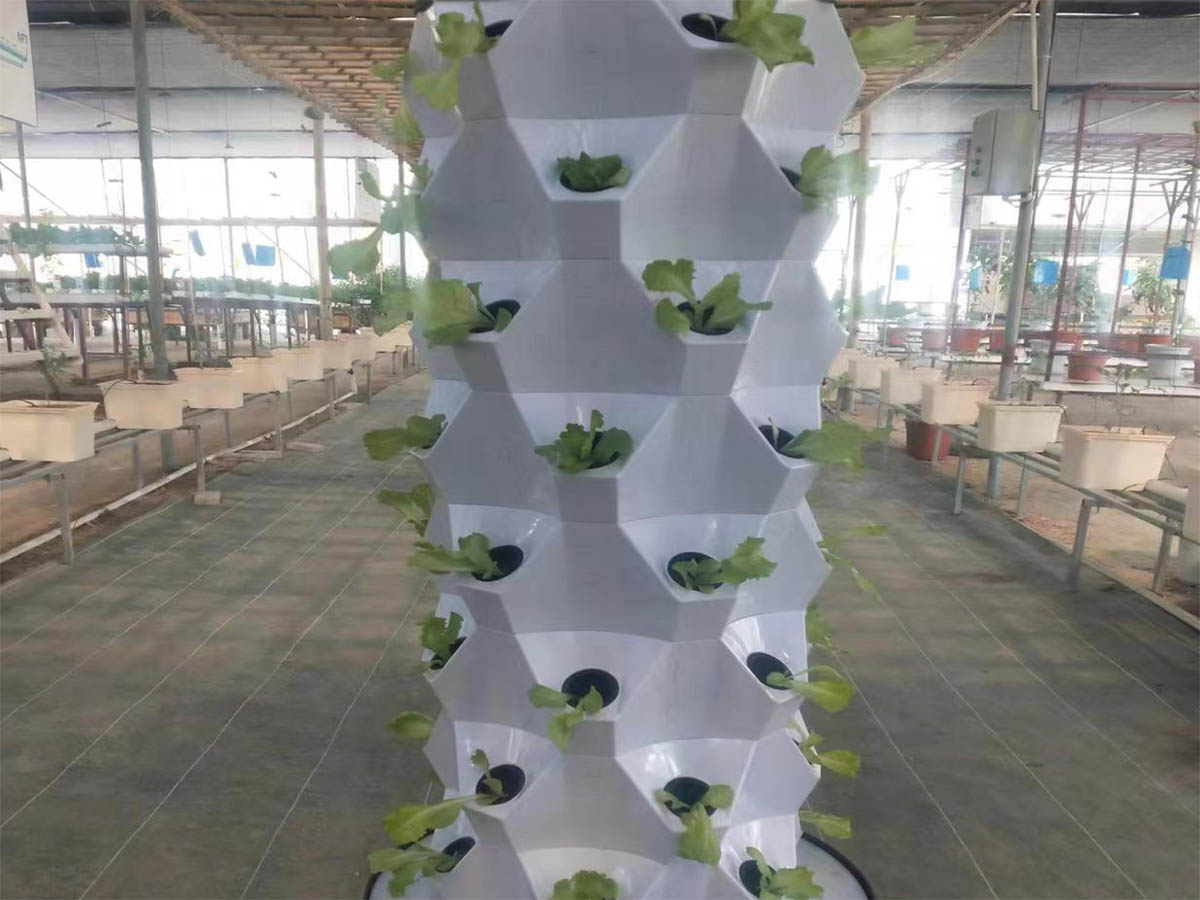
A pineapple tower hydroponic system is a vertical growing structure designed to maximize growing space.
Because pineapple plants can become relatively large compared with lettuce and other leafy vegetables, tower cultivation requires careful consideration of:
Plant spacing
Tower stability
Root-zone volume
Plant weight
Light distribution
Irrigation uniformity
A pineapple tower hydroponic system may be more suitable for small-scale, demonstration, experimental, or specialty growing projects than for conventional large-scale pineapple production.
For commercial pineapple production, horizontal grow bags or Substrate Gutters may provide better support and easier crop management.
A controlled irrigation system can deliver water directly to the plant root zone and reduce unnecessary water loss.
This makes hydroponic pineapple growing attractive for areas where efficient water use is important.
Unlike soil cultivation, hydroponic systems allow growers to control the nutrient solution more directly.
This can help maintain consistent crop nutrition throughout the growing cycle.
Since hydroponic pineapples are grown without traditional soil, growers can reduce problems associated with:
Soil-borne diseases
Soil compaction
Continuous cropping obstacles
Poor soil quality
Vertical and controlled-environment systems can make more efficient use of available growing space.
A pineapple growing system can be designed according to the available greenhouse area and production requirements.
One important consideration is that pineapples generally have a relatively long production cycle compared with fast-growing hydroponic crops such as lettuce.
Therefore, pineapple hydroponics requires patience and careful long-term crop management.
Pineapple plants require more space than many common hydroponic crops.
The growing system needs to provide sufficient physical support and adequate spacing between plants.
Pineapple roots require good aeration and drainage. Excessive moisture around the roots can create unfavorable growing conditions.
For this reason, a well-drained substrate and properly designed irrigation system are important.
A commercial hydroponic pineapple system may require greenhouse structures, irrigation equipment, nutrient management equipment, growing containers, and environmental control systems.
The actual investment depends on the scale and design of the project.
There is no single best hydroponic pineapple system for every growing project. The ideal system depends on the greenhouse structure, climate, production scale, available space, and cultivation method.
For most projects, substrate-based systems with drip irrigation are a practical option because they provide:
Good root support
Efficient drainage
Controlled irrigation
Easy crop management
Flexible greenhouse layouts
A pineapple growing system can also be customized using grow bags, PVC gutters, planting containers, or vertical structures according to project requirements.
| Feature | Hydroponic Pineapple Growing | Traditional Soil Growing |
|---|---|---|
| Growing medium | Cocopeat, coco coir, perlite, etc. | Soil |
| Water management | Highly controllable | Depends on soil and irrigation |
| Nutrient management | Directly controlled | Depends on soil fertility |
| Soil-borne problems | Reduced | More common |
| Space utilization | Can be optimized | Usually requires more land |
| Initial investment | Higher | Generally lower |
| Crop management | More controlled | More dependent on soil conditions |
Hydroponic pineapple growing can be used for commercial or experimental agriculture, but its economic feasibility depends on local conditions.
Commercial growers should consider:
Production cycle
Greenhouse investment
Labor costs
Energy consumption
Water availability
Market price of pineapples
Expected yield
System maintenance
For commercial projects, a properly designed hydroponic pineapple system should be evaluated based on the complete production cost rather than simply the yield per plant.

G and N is serving for more than 1,000 customers over 122 countries around the world, offering high-quality products and services to global customers.
Copyright © 2026 G AND N FORTUNE LIMITED All rights reserved.


