
 English

Products
Productos principales:Canal hidroponico NFT/Cubo holandes hidroponico/Canalon de fresa/
Maceta de red de plastico/Medios de cultivo Rockwool
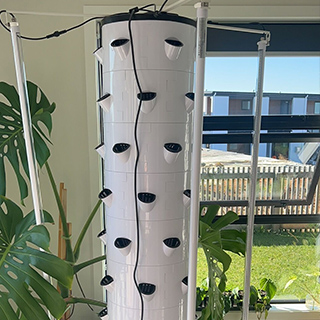


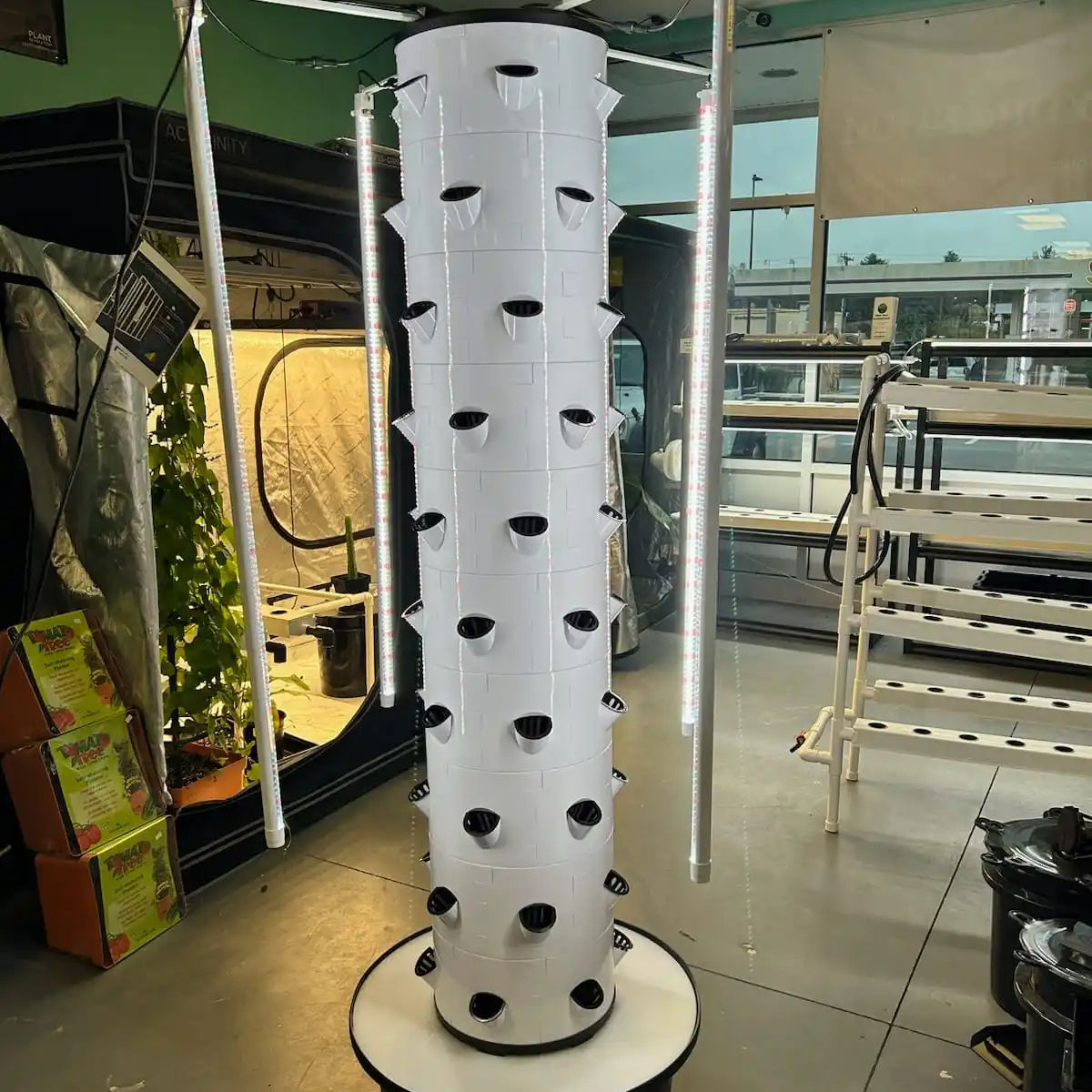
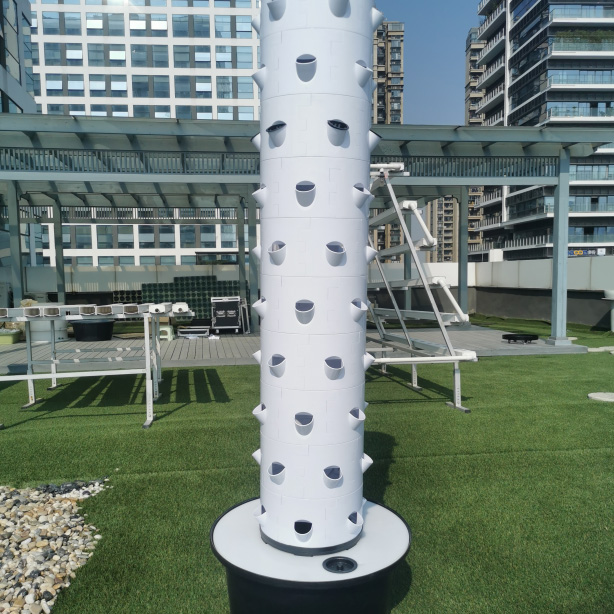
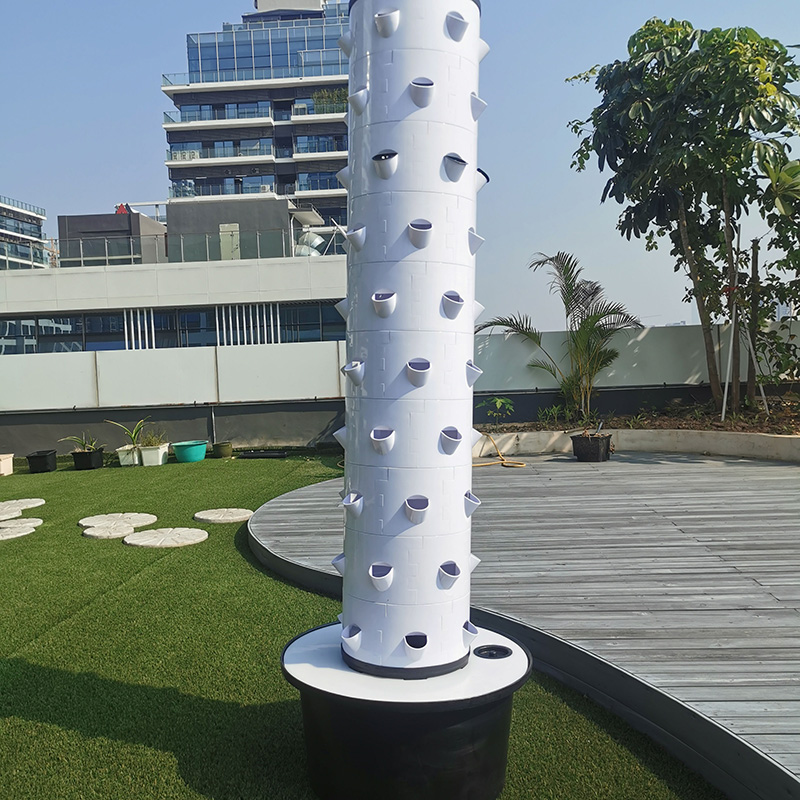
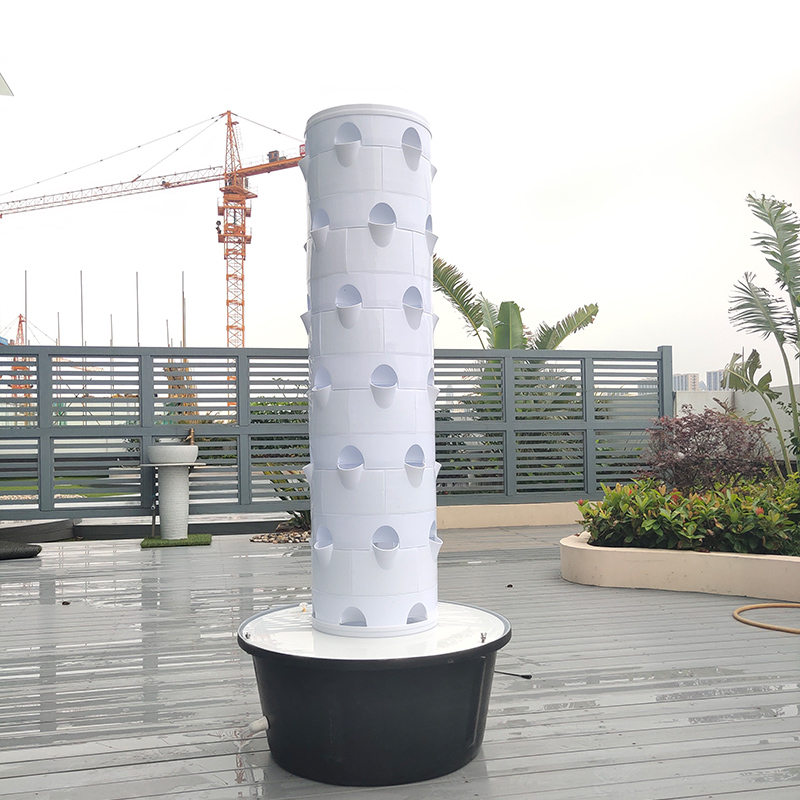
The Vertical Tower is an advanced hydroponic growing system designed for modern vertical farming, indoor gardening, and commercial soilless cultivation. With its vertical structure and optimized irrigation design, this hydroponic tower helps maximize planting space, improve water utilization, and support efficient crop production in different growing environments.
As an upgraded 3rd-generation hydroponic system, the G&N Vertical Tower features modular tower components, a reinforced base structure, a zigzag water distribution system, and a large-capacity 60L water tank. Its integrated design helps distribute nutrient solution across different planting levels while providing a stable structure for continuous growing.
Unlike traditional horizontal NFT systems that use NFT hydroponic channels or PVC NFT channels, this vertical hydroponic system makes better use of vertical space, making it suitable for homes, balconies, greenhouses, indoor farms, and commercial vertical farming projects.
Whether you are looking for an indoor hydroponic tower for home gardening or a scalable hydroponic tower farming solution, G&N provides a practical growing system for modern agriculture.
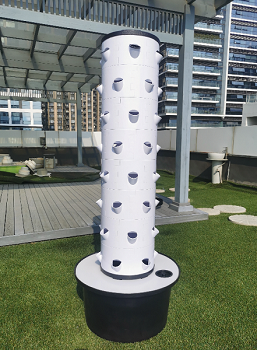
A Vertical Tower is a type of hydroponic grow tower that allows plants to grow vertically without traditional soil cultivation. Multiple planting positions are arranged around a vertical structure, allowing growers to cultivate different plants within a relatively small floor area.
In a typical vertical hydroponic system, nutrient solution is stored in a water tank and delivered to the upper part of the tower through an irrigation system. It then flows through the internal water distribution structure, supplying water and nutrients to plants at different levels.
Compared with traditional horizontal hydroponic growing systems, a hydroponic plant tower makes better use of limited ground space and can accommodate multiple planting positions in one structure.
The G&N Vertical Tower combines modular components, a zigzag irrigation design, and a 60L water tank to support convenient hydroponic cultivation for both beginners and professional growers.
The G&N Vertical Tower features an upgraded modular design with multiple tower body components connected together.
Its main structural highlights include:
Modular tower body pieces
Tight connections between components
Reinforced tower base
Fixing clips for improved stability
Integrated planting positions
The modular structure makes assembly more convenient and allows the tower to be configured for different growing environments.
The tower body components are designed with tight connections to help prevent nutrient solution leakage during operation.
A well-connected structure is especially important for indoor hydroponics, where controlling water leakage helps protect floors and surrounding equipment.
This design makes the hydroponic tower suitable for indoor gardens, balconies, greenhouses, and other growing spaces.
The upgraded tower base is equipped with fixing clips to secure the structure and improve overall stability.
This reinforced base design helps keep the vertical grow tower firmly positioned during daily use. It is suitable for different installation environments, including balconies, rooftops, and greenhouse growing areas.
For outdoor applications, the installation position and additional support should be selected according to local wind conditions and the overall system setup.
The built-in zigzag irrigation system is designed to distribute nutrient solution across the tower's planting positions.
This water distribution structure helps supply different growing levels and supports more uniform irrigation throughout the vertical hydroponic system.
Key advantages include:
Distributes nutrient solution across multiple planting positions
Supports water circulation within the tower
Helps reduce unnecessary water consumption
Provides an integrated irrigation solution for vertical growing
Proper nutrient solution circulation is essential for maintaining suitable growing conditions in a hydroponic grow tower.
The Vertical Tower adopts a half net pot design to help hold plants securely in their growing positions.
This structure supports seedlings and developing plants while helping prevent them from falling out as they grow.
It is suitable for leafy greens, herbs, and selected fruit-bearing plants, depending on plant size and growing requirements.
The hydroponic tower comes with an integrated 60L water tank that stores nutrient solution for the growing system.
Its relatively large capacity helps reduce the frequency of manual refilling. Under suitable growing conditions, the tank may only require refilling approximately once a week. Actual refill frequency depends on crop types, plant quantity, environmental temperature, and water consumption.
The integrated tank provides a convenient nutrient solution storage option for indoor hydroponics and small-scale commercial growing projects.
The G&N Vertical Tower can be used in different growing environments.
For indoor applications, it can be combined with LED grow lights to provide supplemental lighting. For outdoor applications, optional Insect Nets can help protect plants from insects.
It can also be integrated into greenhouse hydroponics projects according to the growing environment and installation requirements.
| Item | Specification |
|---|---|
| Product Name | Vertical Tower |
| Product Type | Hydroponic Grow Tower |
| Generation | Upgraded 3rd Generation |
| Growing Method | Vertical Hydroponics / Soilless Cultivation |
| Structure | Modular Vertical Tower |
| Water Tank Capacity | 60L |
| Irrigation Design | Zigzag Water Distribution System |
| Plant Support | Half Net Pot Design |
| Base Structure | Reinforced Base with Fixing Clips |
| Connection Design | Tight, Leak-Resistant Connections |
| Indoor Application | Optional LED Grow Lights |
| Outdoor Application | Optional Insect Nets |
| Main Applications | Indoor Gardening, Greenhouse Hydroponics, Vertical Farming, Urban Agriculture |
The G&N Hydroponic Grow Tower supports different types of plants, making it suitable for home gardening, indoor farming, and selected commercial growing applications.
Leafy vegetables are commonly grown in vertical hydroponic systems because they can be cultivated in relatively compact planting spaces.
Suitable crops include:
Lettuce
Spinach
Kale
Pak choi
Herbs are another suitable option for hydroponic tower gardening, particularly for indoor kitchens, restaurants, and home gardens.
Common choices include:
Basil
Mint
Parsley
Cilantro
The Vertical Tower can also support selected fruit-bearing plants and vegetables, depending on plant size, root development, and structural support requirements.
Examples include:
Strawberries
Tomatoes
Peppers
The tower can also be considered for growing microgreens and baby vegetables, depending on the planting configuration and crop requirements.
When selecting crops, growers should consider plant spacing, root volume, lighting, nutrient requirements, and the weight of mature plants.
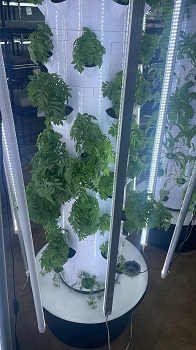
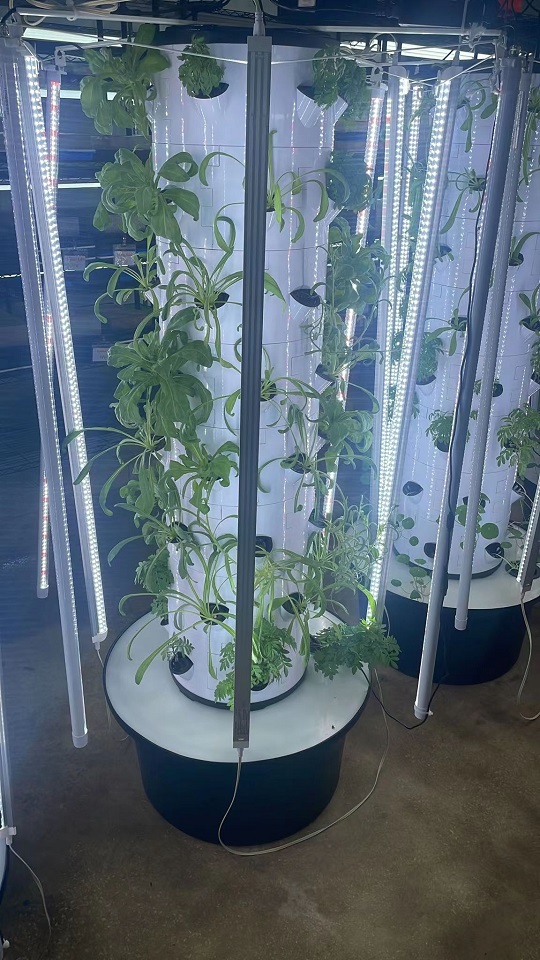
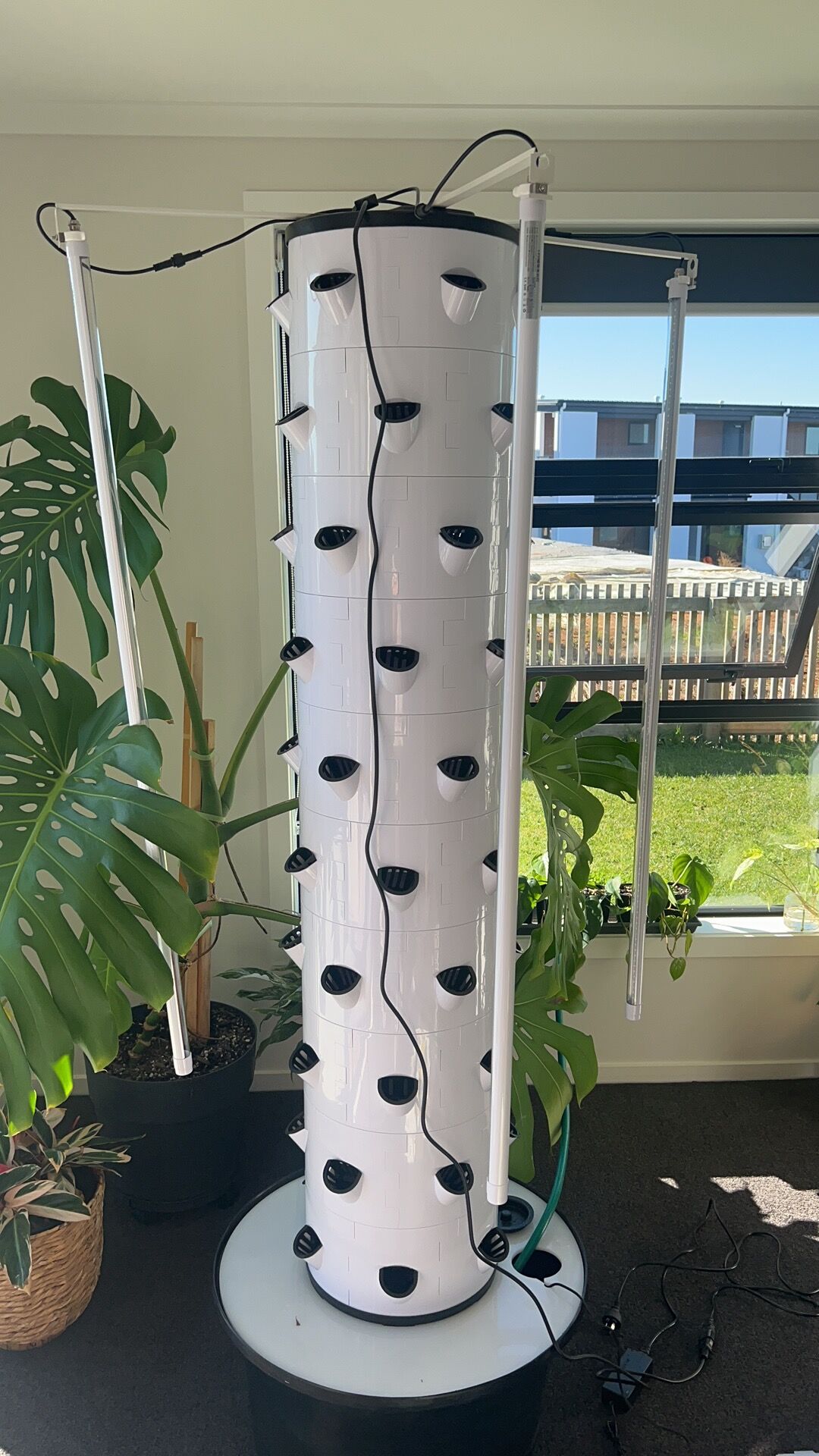
An Indoor Hydroponic Tower is suitable for homes, apartments, offices, kitchens, and other indoor growing spaces.
Its vertical structure allows multiple plants to grow within a compact footprint. When combined with suitable LED grow lights, it can be used for indoor vegetable and herb production.
Vertical farming aims to increase planting density by making use of vertical growing space.
The G&N Vertical Tower provides multiple planting positions within one structure, making it suitable for urban agriculture, small-scale vertical farms, and controlled-environment growing projects.
The tower can be integrated into greenhouse hydroponics environments for growing leafy greens, herbs, and selected vegetables.
Its built-in irrigation design helps deliver nutrient solution throughout the tower, while the modular structure provides flexibility for different greenhouse layouts.
Restaurants, cafés, urban farms, and commercial growers can use hydroponic grow towers to cultivate fresh vegetables and herbs in limited spaces.
The system is particularly useful where efficient space utilization is an important consideration.
The Vertical Tower is also suitable for educational projects, hydroponic demonstrations, and DIY gardening.
Its modular structure and integrated irrigation design provide a practical way to introduce soilless cultivation and vertical growing concepts to beginners and students.
Both vertical hydroponic towers and traditional NFT systems are used for soilless cultivation, but they have different structural designs and installation requirements.
| Comparison | Vertical Tower | Traditional NFT System |
|---|---|---|
| Structure | Vertical modular structure | Horizontal growing channels |
| Space Utilization | Uses vertical space | Uses horizontal growing area |
| Growing Positions | Arranged around the tower | Arranged along NFT channels |
| Irrigation | Integrated zigzag water distribution | Nutrient solution flows through NFT channels |
| Main Advantage | Compact vertical planting layout | Flexible horizontal channel arrangement |
| Typical Applications | Indoor gardens, balconies, vertical farms | Greenhouses and commercial NFT growing systems |
A Vertical Tower is a practical option for projects where floor space is limited and vertical planting is preferred. Traditional NFT channels may be more suitable for growing layouts that require long horizontal planting rows.
The two systems can also complement each other in larger hydroponic projects, depending on crop selection and growing space.
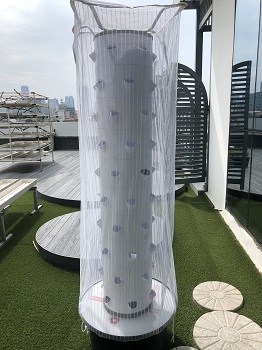
The G&N Hydroponic Tower is designed for convenient assembly and daily operation.
Assemble the modular tower body components.
Secure the tower structure using the base and fixing clips.
Fill the integrated 60L tank with prepared nutrient solution.
Place seedlings into the half net pots.
Connect and activate the irrigation system.
Check the water distribution to ensure that the planting positions receive nutrient solution.
Install optional LED grow lights for indoor use or insect nets for outdoor applications.
To maintain the performance of your hydroponic tower, follow these basic maintenance practices:
Check the water level regularly and refill the tank when necessary.
Monitor pH and EC values to maintain suitable nutrient solution conditions.
Inspect the irrigation system to ensure smooth water distribution.
Clean the water tank and internal water passages regularly.
Check tower connections and base fixing clips.
Remove damaged plant roots and accumulated debris when cleaning.
Regular inspection and maintenance help keep the vertical hydroponic system operating properly throughout different growing cycles.
G&N develops hydroponic growing equipment for indoor gardening, greenhouse cultivation, and commercial soilless farming projects.
The upgraded Vertical Tower combines a modular structure, integrated irrigation design, and a large-capacity water tank to provide a compact vertical growing solution.
Key advantages include:
Space-Efficient Design: Multiple planting positions make better use of vertical space.
Upgraded 3rd-Generation Structure: Modular components provide a practical tower configuration.
Zigzag Irrigation System: Distributes nutrient solution across the growing positions.
60L Water Tank: Provides integrated nutrient solution storage.
Stable Base Design: Fixing clips help secure the tower structure.
Half Net Pot Support: Helps keep plants in position during growth.
Flexible Growing Environments: Suitable for indoor, outdoor, and greenhouse applications.
Whether you are looking for a Hydroponic Tower for Sale, planning an indoor hydroponic garden, or developing a vertical farming project, G&N can provide a practical hydroponic growing solution.
Contact G&N today to learn more about the Vertical Tower, request product details, and discuss your hydroponic growing requirements.
A Vertical Tower is a hydroponic grow tower that arranges multiple planting positions vertically. It uses a nutrient solution circulation system to provide water and nutrients to plants without traditional soil cultivation.
A hydroponic tower can be used for growing lettuce, spinach, kale, pak choi, basil, mint, parsley, cilantro, strawberries, tomatoes, peppers, and selected specialty crops. Crop suitability depends on plant size, root development, and growing conditions.
Yes. The G&N Vertical Tower can be used indoors in homes, offices, kitchens, and indoor growing rooms. LED grow lights can be added to provide supplemental lighting where natural light is insufficient.
Yes. It can be used in outdoor growing areas such as balconies and rooftops. Optional insect nets can be installed for plant protection. For exposed locations, appropriate anchoring and wind protection should be considered.
The built-in zigzag water distribution system guides nutrient solution through the tower and distributes it to different planting positions. It is designed to support irrigation across multiple growing levels.
The Vertical Tower is equipped with a 60L water tank. The tank provides nutrient solution storage for the system and helps reduce the frequency of manual refilling.
Under suitable growing conditions, the tank may only need to be refilled approximately once a week. Actual water consumption depends on plant quantity, crop type, temperature, and environmental conditions. Growers should check the water level regularly.
Yes. The modular tower components and fixing clips are designed to make assembly convenient. Users can connect the tower body pieces, secure the base, fill the water tank, and set up the irrigation system.
A Vertical Tower arranges planting positions vertically and uses an integrated water distribution structure. A traditional NFT hydroponic system uses horizontal growing channels through which a thin film of nutrient solution flows. The main difference is the growing structure and space utilization.
G&N offers Vertical Tower hydroponic growing systems for indoor gardening, greenhouse hydroponics, vertical farming, and commercial growing projects. Contact us to discuss product information and purchasing requirements.
G and N is serving for more than 1,000 customers over 122 countries around the world, offering high-quality products and services to global customers.
Copyright © 2026 G AND N FORTUNE LIMITED All rights reserved.