
 English

News
Focus on G AND N FORTUNE LIMITED - Get to know the new information of the industry quickly!

2026-01-23 10:16:37
Vertical farming hydroponic is an advanced agricultural method that combines vertical farming and hydroponics to grow plants indoors without soil. By stacking plants vertically and supplying nutrients through water-based solutions, this system maximizes space efficiency, resource savings, and crop productivity—especially in urban and indoor environments.
Unlike traditional farming, hydroponic vertical farming systems rely on controlled environments, artificial lighting, and automated irrigation to grow fresh vegetables year-round. This approach has become one of the most effective solutions for sustainable indoor agriculture.
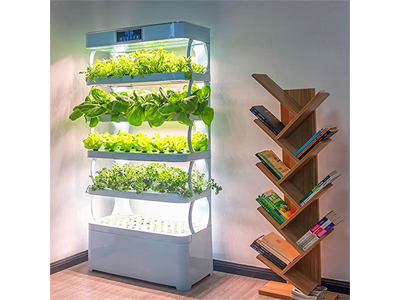
A vertical hydroponic system grows plants upward instead of outward, using shelves, towers, or cabinets. Nutrients are delivered directly to plant roots through water, eliminating the need for soil.
There are several common configurations:
Vertical hydroponics (nutrient-rich water circulation)
Vertical aeroponic system (nutrient mist delivery)
Hydroponic farming tower or Vertical Tower farming
Vertical hydroponic greenhouse setups for semi-commercial use
These systems are often integrated into a plant cabinet indoor or indoor grow cabinet, allowing precise control of light, temperature, humidity, and nutrients.
A vertical hydroponic growing system operates through four core components:
Plants grow in channels, cups, or towers where roots are exposed to circulating nutrient solution. This is the foundation of hydroponic farming vertical methods.
A vertical plant growing system stacks multiple growing layers, dramatically increasing yield per square meter compared to flat farming.
A plant cabinet with grow lights or indoor greenhouse cabinet with lights uses full-spectrum LEDs to simulate sunlight and support photosynthesis.
Modern systems integrate smart hydroponics, automatically managing light cycles, irrigation timing, temperature, and water levels.
A fully enclosed indoor plant cabinet or cabinet for indoor plants is ideal for homes, offices, and retail spaces. These systems combine aesthetics with functionality.
A hydroponic farming tower allows plants to grow around a central column, commonly used in vertical indoor hydroponic system installations.
Large-scale commercial vertical hydroponic system solutions are designed for continuous production, often used in urban farms, supermarkets, and food supply chains.
Vertical farming uses up to 80–90% less space than traditional agriculture, making it ideal for cities.
Hydroponic vertical farming systems use up to 90% less water than soil farming.
A vertical hydroponic system indoor is not affected by seasons, climate, or weather.
No soil means fewer pests, reduced pesticide use, and cleaner produce.
Most best vertical hydroponic system designs support:
Leafy greens (lettuce, spinach)
Herbs (basil, mint, parsley)
Microgreens
Strawberries
Certain vine crops (depending on system size)
This makes vertical hydroponics ideal for both personal consumption and commercial supply.
| Application | System Type |
|---|---|
| Home & Apartment | Indoor grow cabinet, indoor plant cabinet |
| Restaurants & Retail | Vertical hydroponic system indoor |
| Urban Farms | Commercial vertical growing systems |
| Agriculture Enterprises | Commercial vertical hydroponic system |
| Research & Education | Smart hydroponics systems |
For indoor agriculture, the answer is increasingly yes.
Compared with traditional indoor soil farming, a vertical indoor hydroponic system offers:
Higher yields
Lower water usage
Faster growth cycles
Cleaner and more controlled environments
This is why hydroponic farming vertical solutions are rapidly becoming the future of indoor agriculture.
As urbanization increases and arable land becomes limited, vertical farming hydroponic technology will play a key role in global food security.
With advances in smart hydroponics, AI monitoring, and energy-efficient lighting, commercial vertical growing systems and compact home cabinets will continue to evolve—making indoor farming more accessible, scalable, and sustainable.
Vertical farming hydroponic is a modern, efficient, and sustainable way to grow plants indoors. Whether through a compact indoor grow cabinet, a hydroponic farming tower, or a large commercial vertical hydroponic system, this technology represents the future of agriculture.
By combining vertical structures, water-based nutrition, and intelligent control systems, hydroponic vertical farming systems enable anyone—from home users to commercial growers—to produce fresh, healthy food anytime, anywhere.

G and N is serving for more than 1,000 customers over 122 countries around the world, offering high-quality products and services to global customers.
Copyright © 2026 G AND N FORTUNE LIMITED All rights reserved.


